The large format 3D printer market splits into three motion archetypes and one price cliff: bedslingers around $400 to $600, enclosed CoreXY machines from $700 to $1,200, tall delta printers in the middle, and a jump to industrial gear that starts north of $5,000. The right pick is not the biggest bed, it is the machine whose motion system and chamber match the parts you actually print.
I judge big machines the same way I judge any printer: not by the spec sheet, but by how many of twenty long prints finish clean. Across the large-format machines I have run, the differences that matter are stiffness at size, chamber control, and how the motion system behaves when there is a tall, heavy part on the bed. Here is how the real options compare, and which one I would point you to depending on what you build.
The Three Motion Archetypes
Large-format FDM comes in three flavors, and the motion system tells you more about how a machine prints than the bed dimensions do. A bedslinger flings the bed back and forth on Y; a CoreXY moves only the toolhead in X and Y and lifts the bed slowly in Z; a delta uses three vertical towers and a floating effector. Each one scales differently when the part gets big and heavy.
| Archetype | Typical volume | Strength at size | Weakness at size | Rough price |
|---|---|---|---|---|
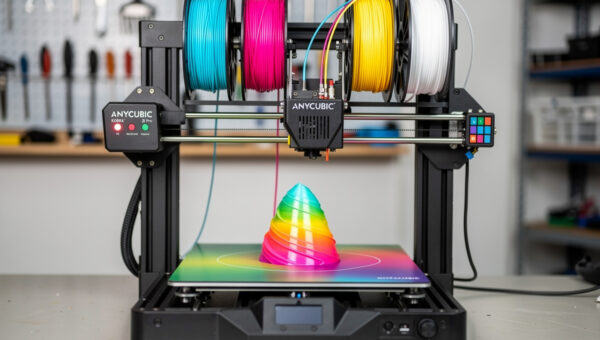
| Bedslinger | 300–420 mm | Cheap, simple, easy to repair | Bed inertia causes ringing and shifts on tall parts | $400–$650 |
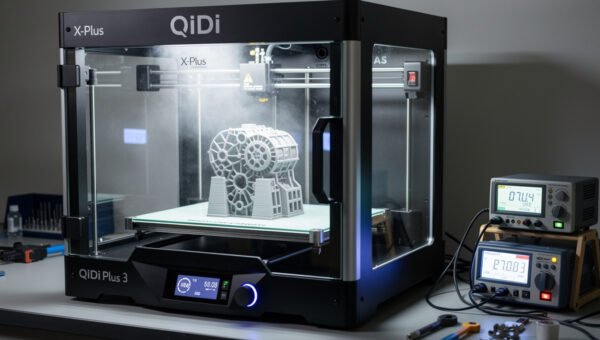
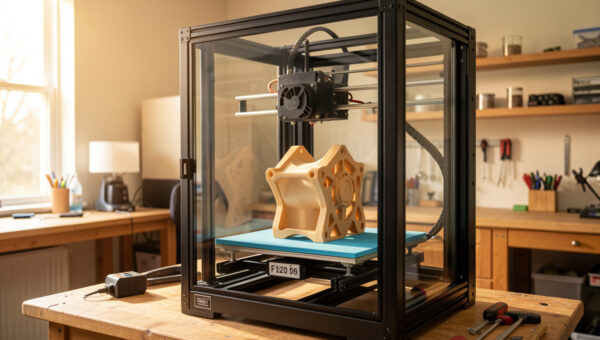
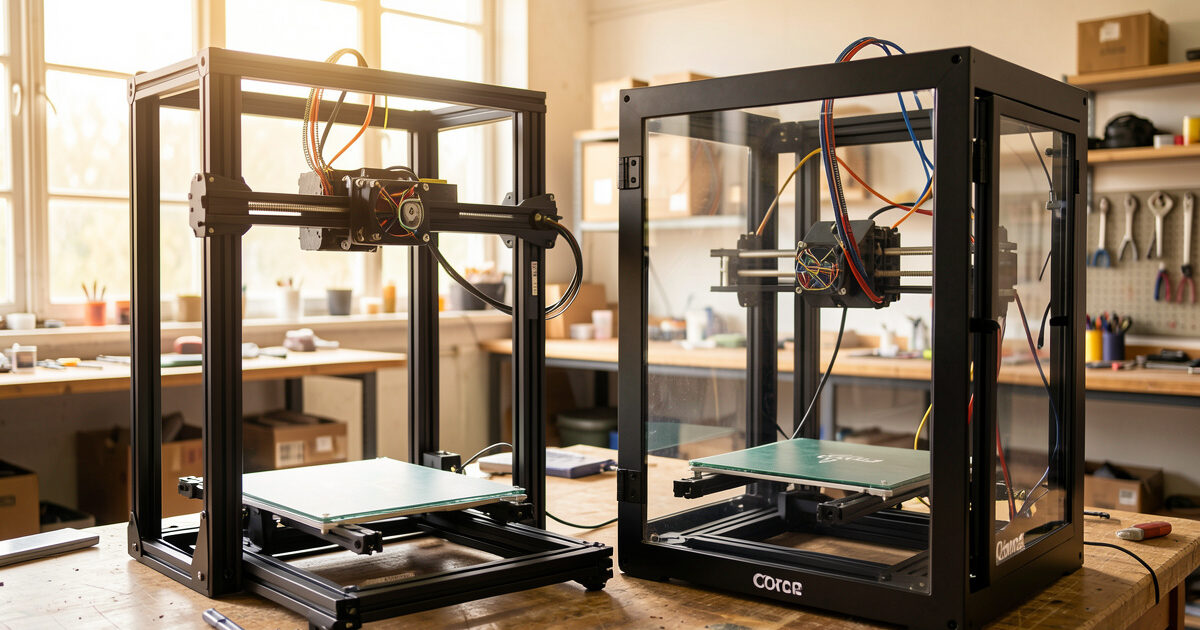
| Enclosed CoreXY | 300–350 mm | Stiff, fast, heated chamber for engineering filament | Pricier, more complex, smaller cube than a big bedslinger | $700–$1,200 |
| Delta | 300×300 tall | Excellent tall single-piece prints, light effector | Calibration fussier, weaker for wide flat parts | $300–$700 |
| Industrial | 500 mm and up | Genuinely huge, engineered frame | Cost, footprint, support contracts | $5,000+ |
The cheapest way to get a huge bed is a bedslinger, and that is exactly why the budget large machines are all bedslingers. The catch shows up at height: when a 400 mm-tall part is whipping forward and backward on the Y axis at speed, the inertia introduces ringing on the walls and, on the worst runs, a layer shift that ruins the whole print. You can tame it by slowing down, but then your already-long print gets longer. That is the trade the spec sheet never mentions.
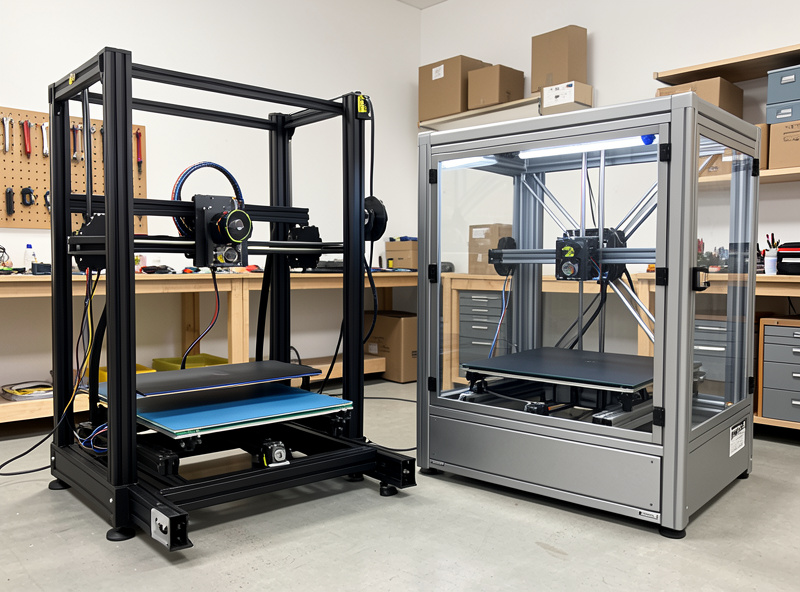
Bedslinger vs CoreXY at Scale
This is the decision most buyers actually face, because the two camps overlap in price. A big bedslinger gives you the largest cube per dollar and prints PLA and PETG happily in the open. An enclosed CoreXY gives you a stiffer machine, faster reliable speeds, and a heated chamber that makes ABS, ASA, and carbon-fiber blends viable, which an open bedslinger simply cannot do at large size. The CoreXY machines I have run hold dimensional accuracy on tall parts far better, which matters the moment your part has to fit something.
My rule of thumb: if you print decorative or light-duty parts in PLA and PETG and you want the maximum possible size for the money, the bedslinger wins. If you print functional, load-bearing, or engineering-material parts and you care about them finishing accurately on the first try, pay for the enclosed CoreXY. The K1C I reviewed is the small-bed version of that CoreXY logic, and the large variants carry the same DNA. For the full breakdown of why chamber control is non-negotiable on the engineering-filament path, the enclosure requirements guide goes deep.
Where Delta Printers Fit
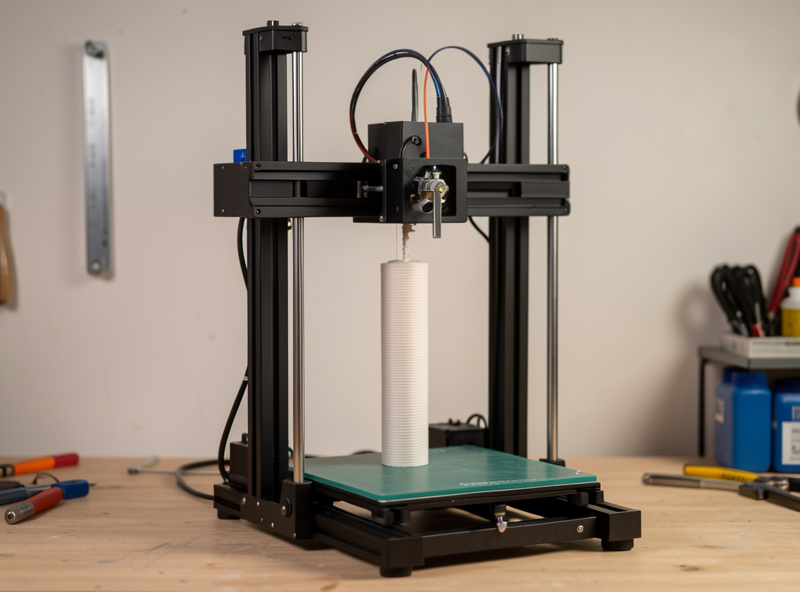
Deltas are the forgotten option, and they are genuinely good at one thing: tall, narrow, single-piece prints. Because the bed never moves, there is no bed inertia to fight, so a delta can run a tall vase or column without the ringing a bedslinger develops. The light effector keeps moving mass low. The downsides are real too: delta calibration is fussier, the circular bed is awkward for wide rectangular parts, and the firmware and tuning are less beginner-friendly. For a maker who specifically needs height over width, a delta is worth a serious look before defaulting to a giant bedslinger.
The Industrial Tier and Why Most People Should Skip It
Above the consumer band sits the industrial side: meter-class frames with engineered gantries and price tags that start in five figures. I am honest about the limits of my bench here, because this is gear the industrial side runs, not something I put hundreds of hours on at home. What I can tell you is that for the overwhelming majority of makers, the jump makes no sense. The frame, the support contract, and the footprint are built for production shops, not workshops. If you find yourself eyeing one, the smarter question is usually whether you should print in sections or run several mid-size machines as a small farm instead, which gets you throughput and redundancy for a fraction of the money.
The Numbers to Check Before You Buy
Advertised build volume is the number that sells the machine and the one most likely to mislead you. The usable volume is always smaller: clips, the purge area, and the slicer skirt eat into the corners, and few large beds are perfectly flat across their whole surface. Before I trust a big machine, I want to know how flat the bed actually is, because a 0.3 mm dip in the center of a 400 mm plate is the difference between a locked first layer and a detached print. A good auto-leveling mesh papers over a lot, but it cannot fix a genuinely warped plate.
The second number is gantry stiffness, which no spec sheet lists. On a tall machine, a flexy gantry shows up as a wavy pattern on the upper layers, and you only find out after a 30-hour print. This is why frame design matters more than raw dimensions, and why I weight build quality over a few extra millimeters of bed. The third thing I check is parts availability: nozzles, belts, and hotends for the popular machines are easy to source, while orphaned models leave you stranded. Reliability and repairability beat size on the list of things that decide whether a big printer is a tool or a doorstop, the same lesson I keep relearning across every functional print I run.
How I Would Choose
Match the machine to the part, not to the headline bed size. For big light-duty parts on a budget, a bedslinger in the 400 mm class is the value pick, and you accept slower speeds to keep tall parts clean. For functional and engineering parts you need to fit and trust, an enclosed CoreXY earns its premium through accuracy and material range. For tall narrow work, a delta quietly beats both. And for true production scale, the answer is usually more machines or sectioning, not one giant industrial frame. If you want my specific machine recommendations rather than archetypes, the best large bed roundup names names, the belt printer comparison covers the long-part alternative, and the large format hub ties the whole decision together. For a sense of how the standard-size machines I run set my reliability bar, the Kobra 3 review and main buyers guide are good context.
Frequently Asked Questions
Is a bedslinger or CoreXY better for large prints?
A bedslinger gives the most bed size per dollar and prints PLA and PETG well in the open, but bed inertia causes ringing on tall parts. An enclosed CoreXY is stiffer, holds accuracy better, and handles engineering filaments, but costs more and often has a smaller cube.
Why do big bedslingers struggle with tall parts?
As a tall, heavy part moves back and forth on the Y axis at speed, its inertia introduces vibration that shows up as ringing on the walls and, in bad cases, a layer shift. Slowing the print reduces it but lengthens an already long job.
Are delta printers good for large format?
Deltas excel at tall, narrow, single-piece prints because the bed never moves, so there is no bed inertia. They are weaker for wide flat parts and need fussier calibration, but for height-focused work they often beat a big bedslinger.
Do I need an industrial machine to print large parts?
Rarely. Industrial frames start in five figures and are built for production shops. Most makers are better served by a consumer large-format machine, printing in sections, or running several mid-size printers as a small farm.
What is the most accurate large format printer type?
Enclosed CoreXY machines generally hold dimensional accuracy best on tall parts, because the bed moves only slowly in Z and the chamber stays temperature-stable. That accuracy is what you are paying the premium for over a budget bedslinger.