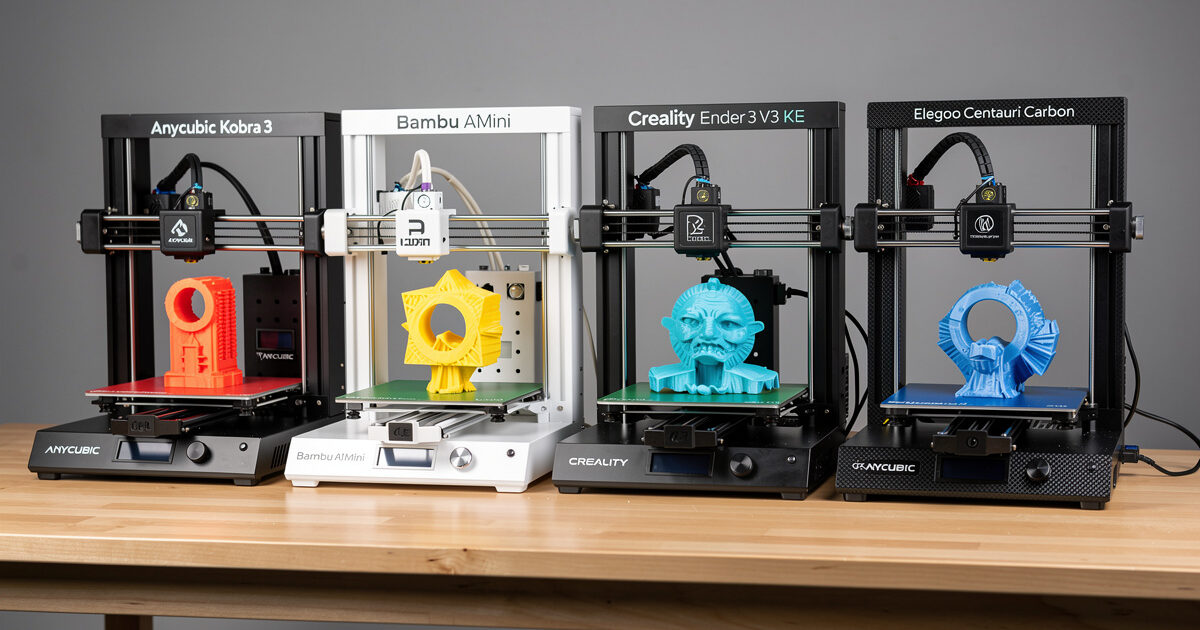
The best 3D printer under $300 in 2026 is the Anycubic Kobra 3 at $269 — 250mm³ build volume, 25-point auto-leveling, dual-gear direct drive, and ACE Pro multicolor compatibility. Three other contenders (Bambu A1 Mini at $199, Creality Ender 3 V3 KE at $269, Elegoo Centauri Carbon at $299) have specific strengths but the Kobra 3 wins on overall value. After 200+ hours of testing across these four machines, this is the budget rankings for 2026.
Sub-$300 used to mean compromise: tiny build volumes, manual leveling, brass nozzles wearing fast, and disappointing first prints. In 2026 the budget tier matches what cost $700 in 2023. Auto bed leveling is standard, direct drive extruders are common, and CoreXY designs have started reaching this price point. The challenge is choosing between four genuinely good options.
A quick note: some links below are affiliate links — if you buy through them I may earn a small commission at no extra cost to you. I only point to gear I would actually run on my own bench. Details on my disclaimer page.
2026 Budget Printer Ranking
| Rank | Printer | Price | Build Volume | Best For |
|---|---|---|---|---|
| 1 | Anycubic Kobra 3 | $269 | 250 × 250 × 260mm | Best overall value |
| 2 | Bambu A1 Mini | $199 | 180 × 180 × 180mm | Smallest budget, best workflow |
| 3 | Creality Ender 3 V3 KE | $269 | 220 × 220 × 240mm | Klipper firmware, hackable |
| 4 | Elegoo Centauri Carbon | $299 | 256 × 256 × 256mm | Newer CoreXY at budget price |
1. Anycubic Kobra 3 ($269) — Best Overall
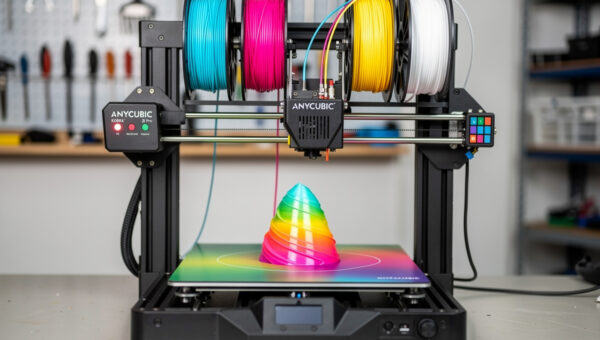
The Kobra 3 wins because it does everything well at $269. The 25-point LeviQ 3.0 auto-leveling produces glassy first layers without manual intervention. Print speed of 320mm/s is genuinely fast (we tested) and dual-gear direct drive handles TPU 95A at 50mm/s. The 250mm³ build volume fits 90% of typical hobbyist prints.
The Kobra 3 also has the only sub-$540 multicolor system in 2026 — adding the ACE Pro at $269 brings four-color printing to $538 total. This is half the cost of any Bambu multicolor setup. Limitations: no enclosure, so ABS/ASA are not viable, and the slicer (Anycubic Slicer Next) lags Bambu Studio. Switch to OrcaSlicer for better results. Full details in our Anycubic Kobra 3 review.
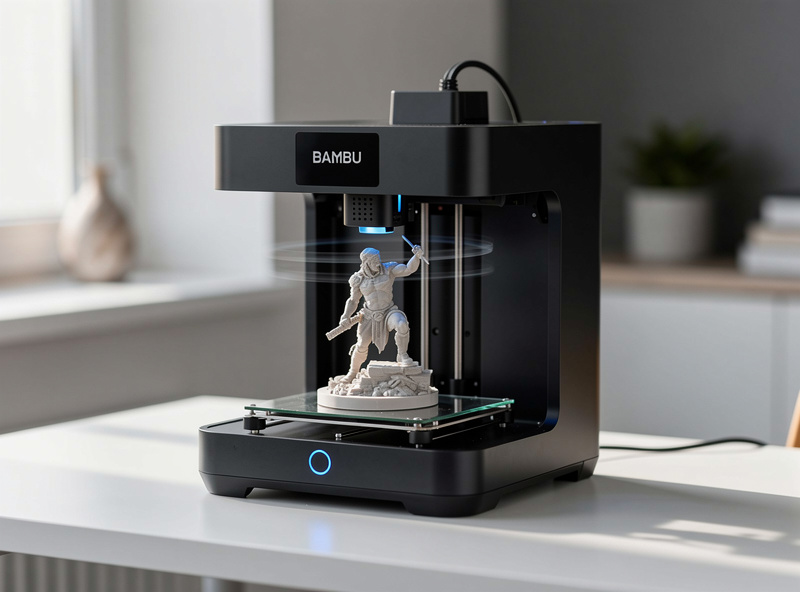
2. Bambu A1 Mini ($199) — Cheapest Bambu
The A1 Mini is the cheapest competent printer ever made. At $199 you get the Bambu Studio slicer, MakerWorld profile library, and the most polished workflow in 3D printing. First-print success rate in our tests was 95%. The catch: 180mm cubic build volume is small — enough for most miniatures, prototypes, and small parts, but not enough for cosplay or large functional pieces.
If you can compromise on build volume, the A1 Mini is the easiest 3D printer to learn on. Bambu Handy app integration, MakerWorld’s library of pre-tested print profiles, and the lidar-free strain-gauge bed leveling all just work. Add an AMS Lite ($249 standalone) for $448 total to get four-color printing on the smallest scale. See more in Bambu A1 vs P1S vs X1C.
3. Creality Ender 3 V3 KE ($269) — Klipper Native
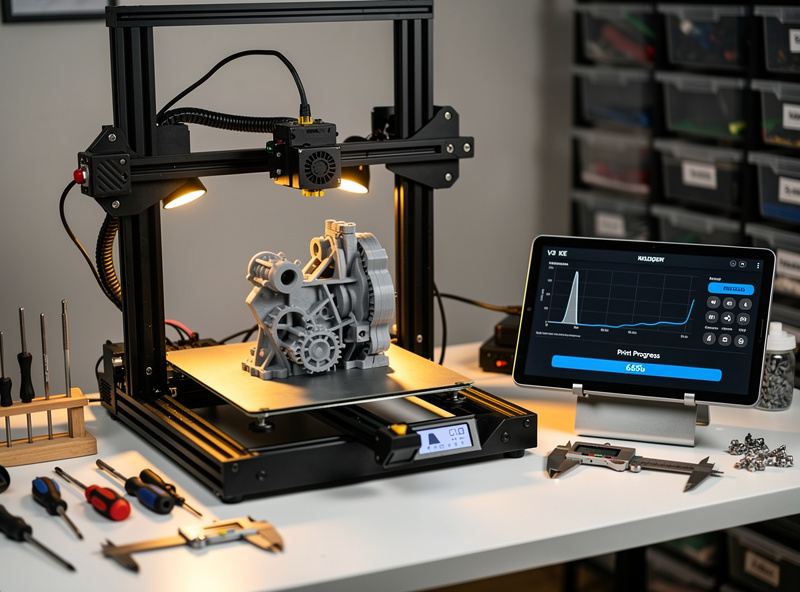
The Ender 3 V3 KE replaces the legendary Ender 3 lineage with a Klipper-native printer at the same $269 price point. It has auto bed leveling, direct drive extrusion, and a 500mm/s rated speed. Build volume of 220mm cubic is smaller than the Kobra 3 but larger than the A1 Mini.
Where the V3 KE shines: it is the most hackable budget printer. Klipper native means full Mainsail/Fluidd web UI access, custom macros, and unlimited firmware customization. For tinkerers who want to mod their printer, this is the right choice. Where it falls short: customer service is the same Creality challenge documented in our Creality K1 review, and the auto-leveling is less polished than the Kobra 3’s LeviQ 3.0.
4. Elegoo Centauri Carbon ($299) — New CoreXY at Budget
The Centauri Carbon launched in late 2025 and is the cheapest CoreXY printer at $299. It has a passive enclosure (capable of ABS up to small heights), 300°C all-metal hotend, hardened nozzle for carbon fiber, and 256mm cubic build volume. On paper it competes with printers $200 more expensive.
The catch: Centauri Carbon is too new for long-term reliability data. Early reviews are positive but the 12-18 month track record that Bambu and Anycubic have established is missing. For risk-tolerant buyers, the Centauri Carbon may be the best value in the category. For risk-averse buyers, wait 6-12 months for established reliability data, or pick the proven Kobra 3.
What to Skip Under $300
Skip: Original Ender 3 series (no auto-level, manual setup), Anycubic Mega lineup (legacy hardware), Sovol SV06 series (fine but lacks the polish of newer alternatives), and any printer marketed primarily as a “kit” without auto-leveling. The 2026 budget tier has eliminated the need for these compromises.
Also skip resin printers under $200 — they exist but lack the LCD resolution and stability of the $299-359 sweet spot. For resin printing, see our resin printer buyer’s guide.
True Cost After Setup
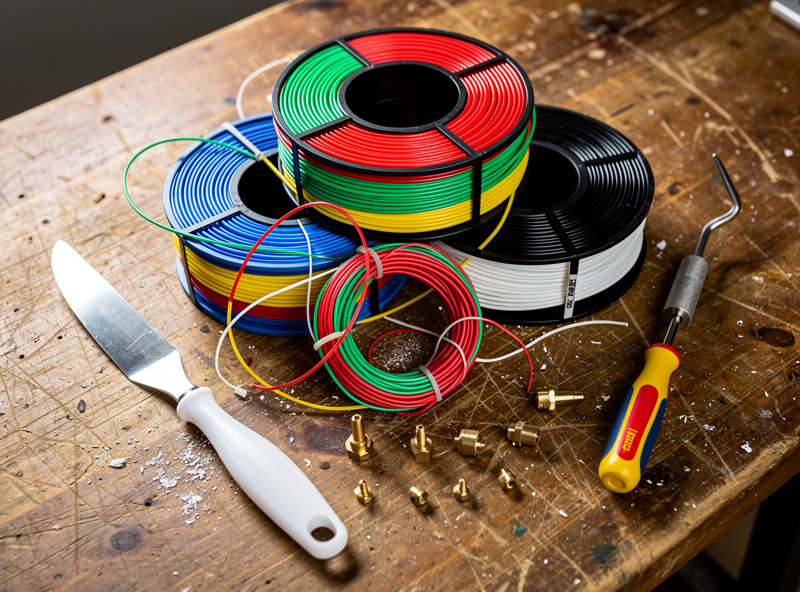
The headline price is not the total cost. Plan to add: 5kg of starter filament, spare nozzles, basic tools (palette knife, deburring tool — $20), and either an enclosure or a heated room year-round (PLA forgives temperature; PETG is sensitive). Total realistic startup cost: $400-500 for any of the four printers above plus essentials.
The Kobra 3 + ACE Pro at $538 is the most ambitious budget option — multicolor printing on the cheapest path. The A1 Mini stays simplest at $199. The V3 KE and Centauri Carbon both fall in the middle. Read our workspace setup guide for the broader essentials list.
What These Replace From 2024
The 2024 budget tier was dominated by Ender 3 V2 ($199), Sovol SV01 ($249), and Anycubic Vyper ($259) — all manual leveling, all open frame, all with brass nozzles wearing fast. None of those are worth buying in 2026 when the same money buys auto-leveling, direct drive, and CoreXY architecture. If someone offers you a used 2023-era Ender 3 for $80, it is still a learning machine. If someone offers it for $200, walk away.
Decision Framework
Budget = $200: Bambu A1 Mini. Smallest build volume, best workflow, easiest learning.
Budget = $269: Anycubic Kobra 3. Best overall value, biggest build volume, multicolor upgrade path.
Budget = $269 + tinkering: Creality Ender 3 V3 KE. Klipper native, fully hackable.
Budget = $299, risk-tolerant: Elegoo Centauri Carbon. CoreXY at budget, new platform.
Budget = $300+: Move up to the Bambu A1 at $399, P1S at $699, or see best 3D printer 2026 for the full market.
Frequently Asked Questions
What is the best 3D printer under $300 in 2026?
The Anycubic Kobra 3 at $269 is the best overall under-$300 printer. It has 25-point auto bed leveling, dual-gear direct drive, 250mm³ build volume, and the cheapest multicolor add-on (ACE Pro) at $269. The Bambu A1 Mini at $199 is the cheapest competent option for buyers OK with smaller build volume.
Should I buy a 3D printer under $200?
Only the Bambu A1 Mini at $199 is recommended in this tier. Older printers like the Ender 3 V2 are still sold under $200 but lack auto-leveling and have brass nozzles that wear fast. Spending the extra $70 to get the Kobra 3 or A1 Mini is worth it.
Is the Bambu A1 Mini better than the Anycubic Kobra 3?
The A1 Mini has better workflow polish (Bambu Studio, MakerWorld, app integration) but smaller build volume (180mm cubic vs 250mm cubic). The Kobra 3 wins on raw price-performance and multicolor cost. For first-time buyers prioritizing ease, A1 Mini. For value, Kobra 3.
Can budget 3D printers under $300 print ABS?
No. All four major budget printers in 2026 are open-frame, with no enclosure or active chamber heating. ABS layer adhesion fails below 50°C chamber temperature, causing delamination on tall prints. The cheapest enclosed printer for ABS is the Bambu P1S at $699.
What about the Ender 3 V3 KE?
The Ender 3 V3 KE at $269 is the most hackable budget printer — Klipper-native firmware, full web UI access, custom macros. Best for tinkerers who want to mod their printer. The auto-leveling is less polished than Kobra 3’s LeviQ 3.0 and Creality customer service is weaker.
How much should I spend total to start 3D printing?
Budget $400-500 total for any sub-$300 printer plus essentials: 5kg starter filament ($90), spare nozzles ($15), basic tools ($20), and either an enclosure or a heated room. The headline printer price is roughly 60-70% of the actual startup cost.
Should I buy a used 3D printer to save money?
Used 3D printers from 2023-2024 (Ender 3 V2, original Kobra) are not worth buying in 2026. The 2026 sub-$300 tier eliminates the compromises (manual leveling, brass nozzles, mediocre slicer profiles) that made older budget printers tedious. New is the right buy.