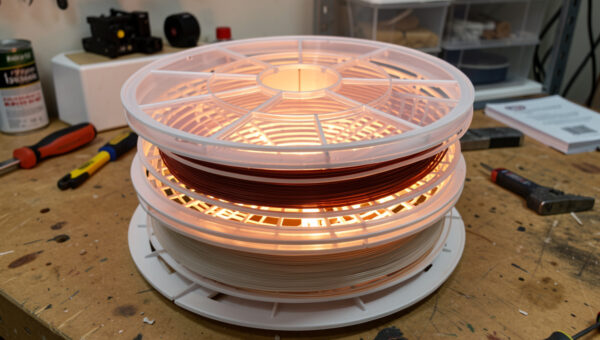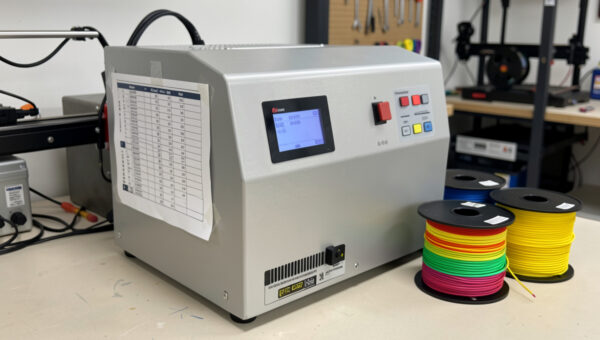
The Bambu AMS is one of the best things to happen to convenient multi-color printing, and one of the most misunderstood things in the moisture conversation. People buy a printer with an AMS, see the desiccant tray, and assume their filament problems are solved — the AMS will keep everything dry, maybe even dry it. Then a spool of TPU or nylon prints badly and they’re confused. The truth is more nuanced and worth getting right, because once you understand what the AMS actually does, it becomes a genuinely useful part of a moisture strategy rather than a false sense of security. I run a Bambu A1 and P1S on my bench alongside my other machines, so this is the AMS reality from someone who lives with it.
The one thing to understand: the AMS is storage, not a dryer
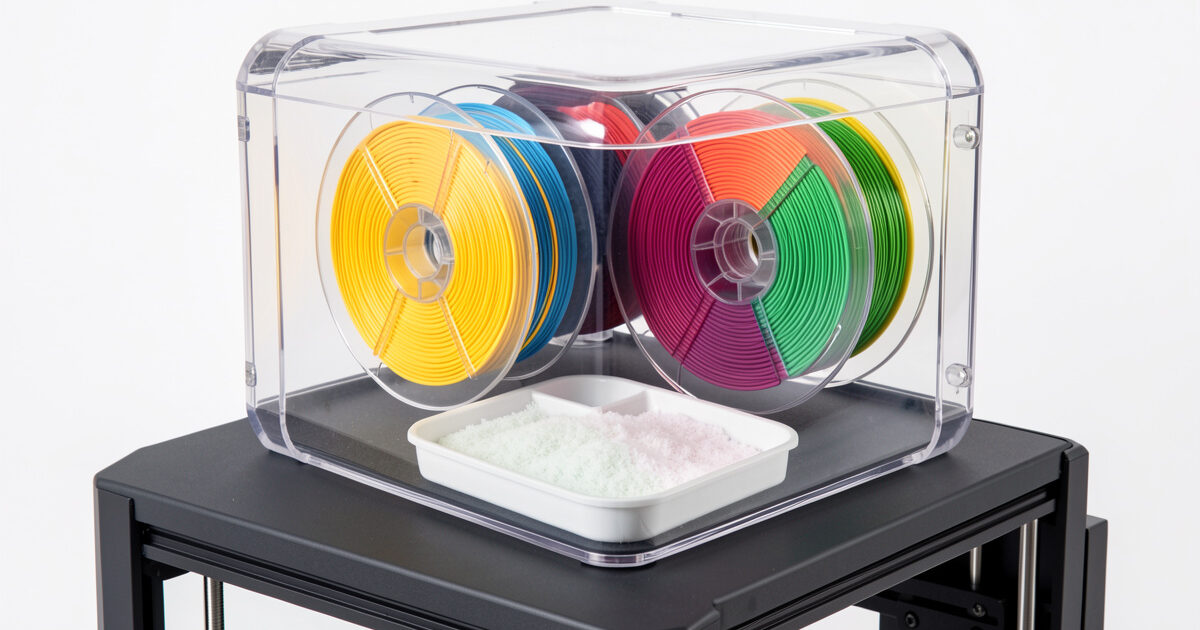
This is the whole article in one sentence: the AMS is a sealed-ish storage compartment with a desiccant tray — it keeps already-dry filament dry, but it does not actively dry wet filament. There’s no heating element drying your spools in there. The desiccant tray adsorbs moisture from the air inside the enclosure, holding the internal humidity down so the filament trends toward dry rather than wet. That’s storage duty, the same job a desiccant tub does, just integrated into the printer with the bonus of automatic feeding and color switching.
What this means in practice: an AMS with fresh desiccant will keep a dry spool printable for a long time, which is genuinely valuable. But drop a wet spool of nylon into it and it stays wet — the AMS can’t drive that absorbed moisture back out. For that you need heat, from a dryer or dehydrator, before the spool goes in the AMS. If the dry-versus-store distinction is new to you, my filament moisture guide covers it in full; this article applies it to the AMS specifically.
What the AMS does well
- Keeps dry filament dry. With fresh desiccant, the sealed enclosure holds humidity down and protects spools that went in dry. For PLA and PETG that you cycle through regularly, this is often all the moisture management you need.
- Reduces handling exposure. Filament that lives in the AMS isn’t sitting open on a shelf absorbing room humidity between prints. Less exposure, less uptake.
- Automatic feeding and switching. The convenience is real — multi-color and multi-material without manual swaps, with the spools kept in a controlled-humidity space.
What the AMS does not do
- It doesn’t dry wet filament. No heat, no active drying. Wet in, wet out.
- It doesn’t make nylon or CF blends printable on its own. Those thirsty engineering materials need active drying before printing and often a heated environment to print from — the AMS storage humidity isn’t low enough or active enough for them.
- It doesn’t refresh its own desiccant. The tray saturates over time and stops working until you recharge or replace it. Set-and-forget is exactly the wrong mindset.
Keeping the AMS actually effective
| Task | Why it matters | How often |
|---|---|---|
| Recharge/replace desiccant | Saturated desiccant protects nothing | When the indicator shifts or humidity climbs |
| Monitor internal humidity | Tells you if the desiccant is still working | Glance whenever you load a spool |
| Dry thirsty spools before loading | AMS can’t dry them itself | Every nylon/TPU/CF/PC spool |
| Keep the lid/seal intact | A leaky enclosure leaks humidity in | Check periodically |
The single highest-value habit is refreshing the desiccant on a real schedule. The AMS’s protection is only as good as the desiccant in its tray, and that desiccant is a consumable that saturates. Many people never touch it after setup and then wonder why their filament isn’t protected — the beads are spent. Use indicating desiccant so you can see when it’s done, and keep a stash of rechargeable indicating desiccant on hand to swap in. For the deeper desiccant decisions — type, dosing, recharging — see my dedicated breakdown on the best desiccant for filament storage.
AMS vs AMS Lite vs an external dry box
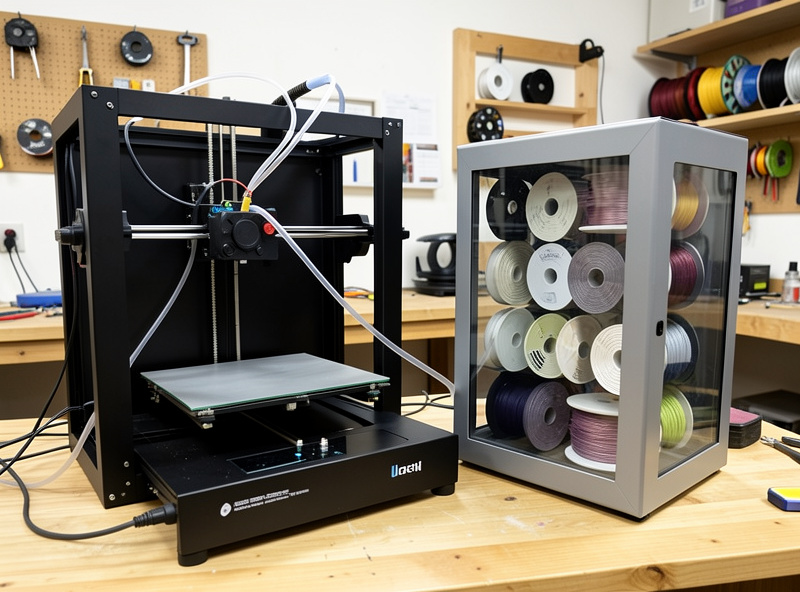
Worth a quick map of the options, because they protect filament differently. The enclosed AMS (on the P1S/X1C class) is the best of the built-in options for humidity — it’s a properly sealed box with a desiccant tray, so dry spools stay dry well. The AMS Lite that ships with the A1 is open-frame: it handles the multi-color feeding beautifully but offers essentially no humidity protection, because the spools sit out in the open air. If you run an A1 with the AMS Lite, your spools are exposed to room humidity exactly as if they were on a shelf, so storage discipline matters just as much as it would without any AMS at all.
An external heated dry box feeding the printer is the only one of the three that actively dries and can hold a thirsty material in a warm, low-humidity environment while printing. For nylon and CF blends, that external dry box — not the AMS — is the real answer. Plenty of Bambu users run an external dryer for engineering materials and reserve the AMS for the PLA/PETG color work it excels at. There’s no shame in that; it’s matching each tool to what it’s good at.
Why the enclosed design helps at all
The reason the enclosed AMS protects filament is simple physics: a sealed volume with desiccant reaches and holds a lower equilibrium humidity than the open room. The filament inside trends toward the moisture content that corresponds to that lower humidity, which for PLA and PETG is comfortably printable. The catch is that this only works while three things hold: the seal is intact, the desiccant is active, and the spool didn’t arrive wet. Break any one of those — a cracked lid gasket, saturated beads, or a soaked spool off-gassing moisture into the box — and the protection collapses. That’s why the maintenance habits above aren’t optional extras; they’re what makes the design deliver on its promise.
The right workflow with an AMS
- Load dry filament. Fresh sealed PLA/PETG goes straight in. Thirsty materials get dried in a heated dryer or dehydrator first.
- Keep the desiccant alive. Indicating desiccant in the tray, refreshed when it shifts color. This is the maintenance that makes the AMS work.
- Monitor humidity. Bambu’s system reports humidity, and you can add a small hygrometer if you want an independent reading. Watch it; a climbing number means recharge.
- Handle thirsty materials separately. Nylon, PC, and CF blends are best dried and printed from an always-on heated dry box rather than relying on AMS storage humidity. The AMS shines with PLA/PETG; the engineering materials want more.
Done this way, the AMS earns its place: it’s a convenient, humidity-controlled home for the materials you print most, sitting on top of a real drying-and-storage routine rather than replacing one. For the materials that genuinely need a heated environment, pair the AMS with a proper heated filament dry box and reserve the AMS for the easygoing spools.
AMS humidity expectations, honestly
An AMS with fresh desiccant holds its internal humidity meaningfully below the room — that’s the point of the sealed enclosure plus desiccant. But it’s a passive system, so it won’t hit the very low single-digit-to-teens humidity of a vacuum bag with a fat desiccant load, and it can’t out-pull a leaky seal or a spool that’s actively off-gassing moisture because it went in wet. Set expectations accordingly: the AMS is excellent insurance for dry spools, mediocre for borderline ones, and useless for genuinely wet ones. Match the tool to the material and it never disappoints.
Frequently asked questions
Does the Bambu AMS dry filament?
No. The AMS is a sealed storage compartment with a desiccant tray, not a dryer. It keeps already-dry filament dry by holding internal humidity down, but it has no heating element and cannot drive moisture out of a wet spool. Thirsty materials must be dried in a heated dryer or dehydrator before they go into the AMS.
Can I print nylon or carbon-fiber filament from the AMS?
You can feed them through it, but the AMS won’t dry them or keep them dry enough on its own — nylon, polycarbonate, and carbon-fiber blends are highly moisture-sensitive and want active drying plus, ideally, a heated environment to print from. Dry those spools separately first, and for best results print them from an always-on heated dry box rather than relying on AMS storage humidity.
How often should I replace the AMS desiccant?
Whenever it saturates, which you’ll know from an indicating color change or from the internal humidity climbing. The desiccant is a consumable, and the most common AMS mistake is never refreshing it after setup — once the beads are spent the AMS stops protecting your filament. Use indicating, rechargeable desiccant so you can see when it needs attention.
Is the AMS enough moisture protection on its own?
For PLA and PETG that you cycle through regularly, an AMS with fresh desiccant is often all the protection you need. For thirsty engineering materials it’s not enough — those need active drying and a heated print environment. Think of the AMS as excellent storage for easygoing materials, sitting on top of a real drying routine for the demanding ones.
Will a wet spool dry out if I leave it in the AMS long enough?
Not meaningfully. The AMS lowers humidity passively through desiccant, which pulls moisture far too slowly to dry a wet spool — the same reason a desiccant tub can’t dry filament. To remove absorbed moisture you need heat. Dry the spool with a dryer or dehydrator first, then use the AMS to keep it dry.