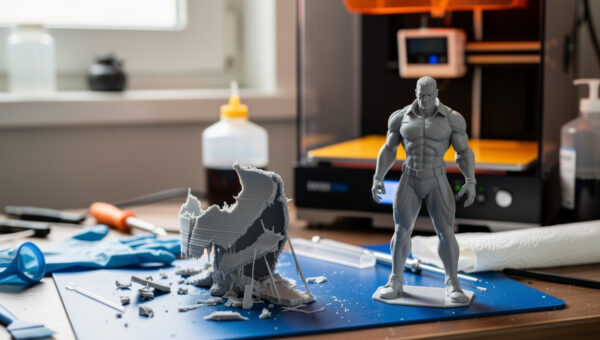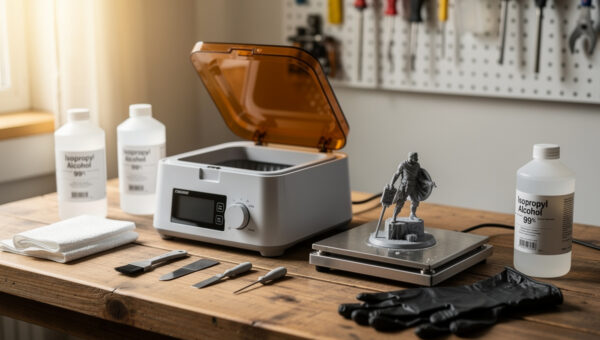
Resin safety is the part of MSLA printing that FDM owners most often underestimate, and it’s the one area where I tell people to slow down before buying. Liquid photopolymer resin is a skin and respiratory sensitiser: repeated unprotected contact is how hobbyists develop resin allergies that can end the hobby for good, often with no warning. The good news is that the precautions are simple, cheap, and become automatic — gloves, ventilation, eye protection, and careful handling and disposal.
I run an FDM-first bench and treat resin as my second discipline, so I built my safety routine deliberately rather than absorbing it over years, and I cross-checked it against the safety guidance resin manufacturers and experienced operators publish. None of what follows is medical advice — if you develop a skin reaction or respiratory symptoms, stop and see a professional. This is the practical setup that keeps a home resin printer safe, and it pairs with the wider process in the complete resin printing guide.
Why Uncured Resin Needs Respect
Uncured liquid resin is the hazard — not the finished, fully cured part. Manufacturer safety sheets classify most photopolymer resins as skin and eye irritants and potential sensitisers, which means exposure can build into an allergic response over time even if the first contact causes nothing. The vapour given off while printing is the other half: it’s why ventilation matters even when you never touch the resin directly.
The key mental model is that danger lives in the liquid and the fumes, and disappears once the resin is fully cured and solid. Everything in a good safety routine is about keeping liquid resin off your skin, its vapour out of your lungs, and making sure waste resin is cured solid before it leaves your workshop. Once a part is washed and properly cured, it’s inert and safe to handle, sand, and paint.
Gloves and Skin Protection
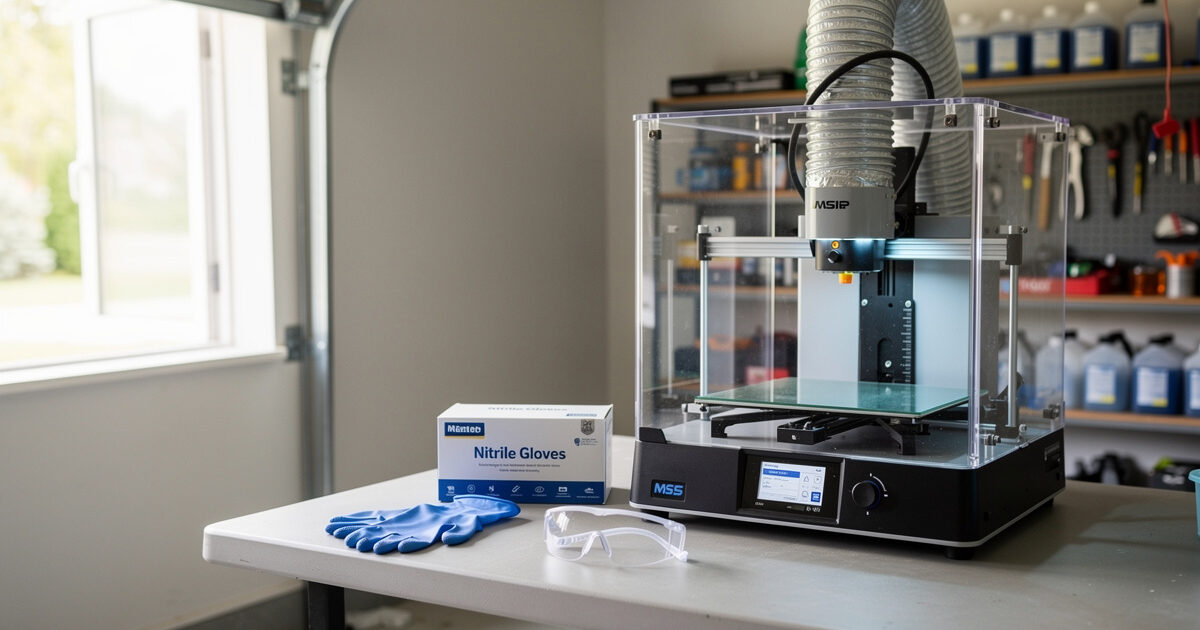
Nitrile gloves, every single time you touch resin or a wet print, are the non-negotiable baseline. Not latex — nitrile, because it resists the chemistry better. Treat gloves as single-use around resin; the moment one gets resin on it, that surface is contaminated and shouldn’t touch a doorknob, a phone, or your face. A box of nitrile gloves is one of the cheapest consumables in the hobby and the most important.
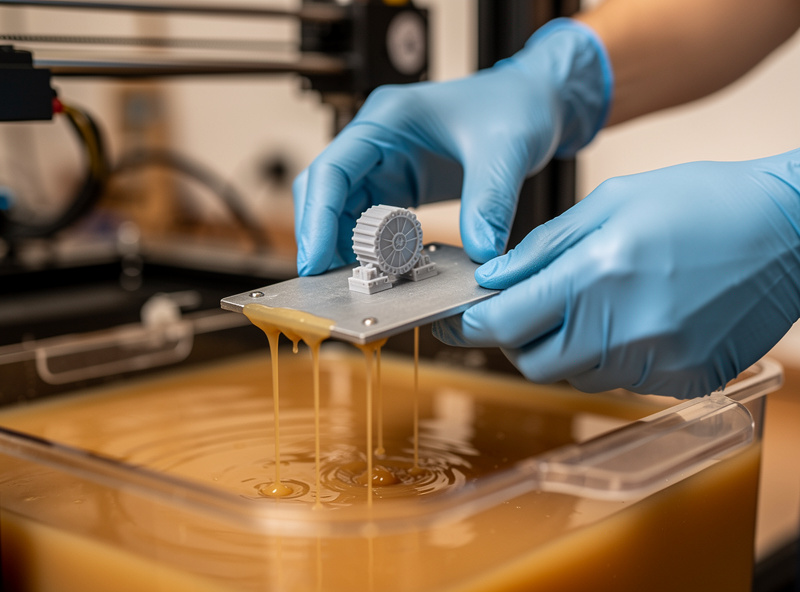
Cover bare skin if you’re prone to splashes — long sleeves or an apron earns its place once you’ve cleaned resin off a forearm. If resin does contact skin, wash promptly with soap and water (not isopropyl alcohol, which can drive it into the skin). Keep a roll of paper towels and a dedicated cleanup area so a drip never spreads. The discipline that keeps people in the hobby long-term is simple: assume every wet surface near the printer has resin on it, and glove up before you reach for anything.
Ventilation: The Most Overlooked Step
Real ventilation means active air movement that carries vapour away from where you breathe — not a cracked window and a hope. Resin printers give off VOCs and a characteristic odour during printing, and the safest setups treat that air the way I treat fumes from the welder or laser in my shop: capture it and move it outside.
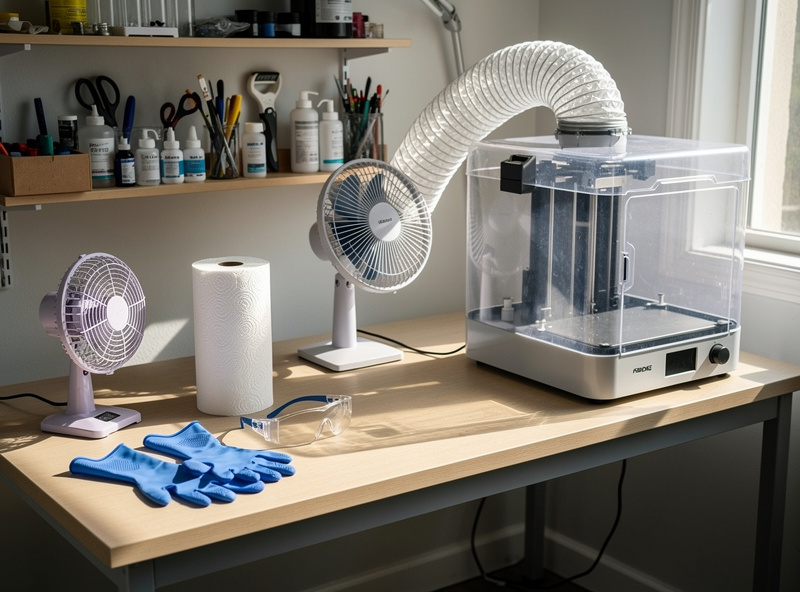
The common home approaches are to run the printer inside an enclosure ducted to a window or outdoors, or to fit a carbon-filter air scrubber sized for the space. A printer’s own cover is not ventilation — it contains spatter and light, but the fumes still need somewhere to go. The same ducted-exhaust logic I use when printing ABS and ASA in an enclosure applies here, just aimed at fumes instead of warping. If you can smell resin strongly from across the room, your ventilation isn’t doing enough yet.
Eye Protection and UV Awareness
Wear eye protection when you handle the vat or pour resin — a splash to the eye is exactly the kind of accident gloves can’t prevent. Beyond splashes, be mindful of UV: the printer’s LCD masks most of it during normal operation, but a curing station and the sun both put out enough UV to cure resin (and to be worth shielding your eyes from). Don’t stare into a running cure station, and keep the printer’s UV cover closed while it prints.
This is also why you store resin away from light. Ambient UV slowly cures resin in the bottle and in the vat, which both wastes material and is a reminder of how reactive the liquid is. A bottle left open on a sunny bench degrades faster than you’d expect — keep it sealed and shaded.
Waste, Spills, and Disposal
Uncured resin is the part of disposal people get wrong, and it matters environmentally as much as personally. Liquid resin and resin-contaminated isopropyl alcohol or wash water must never go down the drain or into general rubbish as a liquid — uncured resin is harmful to aquatic life. The fix is simple: cure it solid first. Leave contaminated liquid or wash water in sunlight or under a UV lamp until the resin in it solidifies, then dispose of the cured solids per your local rules and the now-clean liquid appropriately.
For spills, contain with paper towels while gloved, wipe the area, and cure any residue before binning the towels. Keep a dedicated set of cleanup supplies that never migrate to the clean side of the workshop. Treating resin waste as something to neutralise rather than pour away is the habit that keeps both your drains and the environment clear.
A Repeatable Safety Routine
The reason to make safety a fixed routine rather than a judgement call is that resin sensitisation is cumulative — the risk comes from the hundredth careless contact, not the first. A short pre-print and post-print checklist removes the judgement entirely. Before printing: gloves on, ventilation running, eye protection within reach, cleanup supplies stocked. After printing: glove up before opening the printer, wash and cure the part, cure any waste solid, wipe down surfaces, and bin contaminated towels.
If you want to assemble the kit in one go, the essentials are nitrile gloves, safety glasses, and a way to move air — a small enclosure with a duct or a carbon air filter sized for the room. Get those three sorted before your first bottle of resin arrives, and the rest of the hobby is the fun part.
Note: a few links above are affiliate links — buy through them and I may earn a small commission at no extra cost to you. I only recommend gear I’d use in my own shop. See my disclaimer page.
Frequently Asked Questions
Is resin 3D printing toxic?
Uncured liquid resin and its fumes are skin and respiratory sensitisers, so they require nitrile gloves and ventilation. Fully cured resin parts are inert and safe to handle. The hazard lives in the liquid and the vapour, not the finished print.
Do I really need ventilation for resin printing?
Yes. Resin printers release VOCs and odour while printing, so you need active airflow that moves vapour away from where you breathe, such as an enclosure ducted outdoors or a carbon-filter scrubber. The printer’s cover contains spatter but is not ventilation.
What should I do if resin gets on my skin?
Wash the area promptly with soap and water, not isopropyl alcohol, which can drive resin into the skin. Repeated exposure can cause an allergy over time, so glove up to prevent contact. If a reaction develops, stop and see a medical professional.
How do you dispose of uncured resin safely?
Never pour liquid resin or resin-contaminated alcohol or wash water down the drain. Cure it solid first by leaving it in sunlight or under a UV lamp until it hardens, then dispose of the cured solids according to your local regulations.
Are gloves and a mask enough for resin safety?
Gloves and eye protection cover skin and splash risk, but you also need ventilation for the fumes. The three pillars are nitrile gloves, eye protection, and active air movement. Add careful disposal and the routine covers the realistic hazards of home resin printing.
Is the smell of resin harmful?
A strong, persistent resin smell signals that VOCs are building up and ventilation is inadequate. Improve airflow until the odour is faint. Treat a noticeable resin smell as a prompt to ventilate better rather than something to get used to.