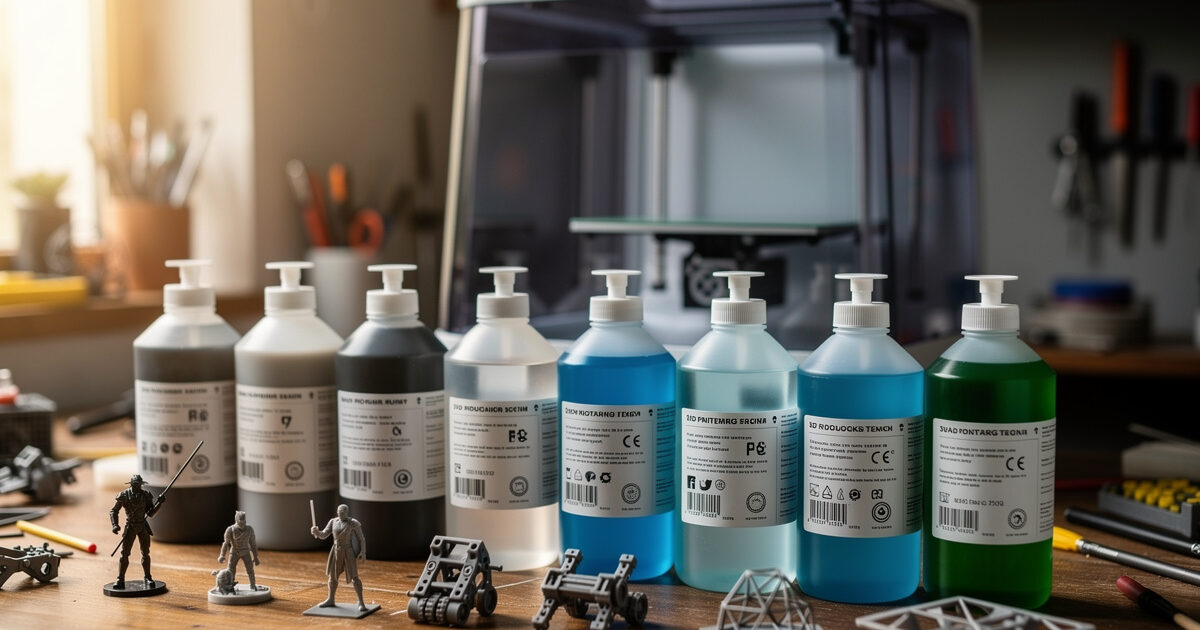
The label on a resin bottle tells you almost nothing about how the part will behave. “Standard,” “tough,” “ABS-like,” and “water-washable” are the four families most home printers actually choose between, and they differ less in how they print than in how the finished part survives once it’s in your hand. Picking the wrong one is the most common reason a perfectly printed model snaps the first time it’s dropped.
I came to resin from an FDM-first bench, where PLA is a sane default for most jobs and the material rarely surprises you. Resin doesn’t work that way — the resin you load changes your exposure settings, your part’s toughness, and even your post-curing routine. What follows is the practical map I built for choosing between families, cross-checked against what experienced resin operators consistently report, because some of these trade-offs only show up after hundreds of prints. For the full process around all of this, start with the complete resin printing guide.
Standard (Rapid) Resin: The Detail Default
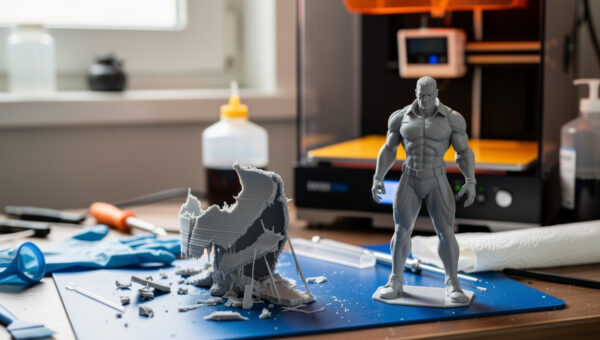
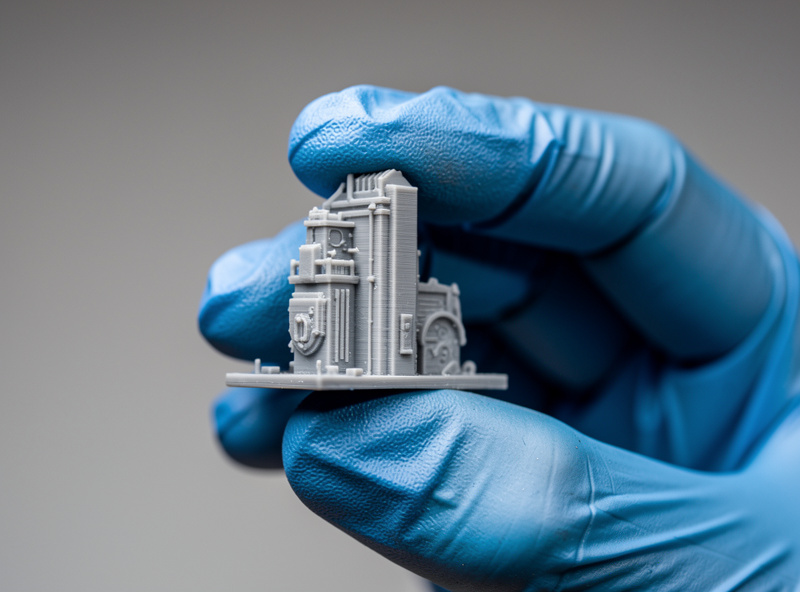
Standard resin — often sold as “rapid” or “fast” — is the brittle, detail-focused photopolymer that most people start with. It cures quickly, holds the finest features, and sands beautifully for painting, which is exactly why it dominates the miniature and model world. The trade-off is in your hand the moment the part is: standard resin is glassy and brittle, and a thin section will shatter rather than bend.
For cosmetic parts that sit on a shelf, that brittleness never matters. For anything that gets handled, dropped, or stressed, it matters a lot. I treat standard resin the way I treat the most detailed FDM work — perfect for showpieces, wrong for function. It’s also the cheapest and most forgiving family to dial in, which makes it the right first bottle while you learn how exposure behaves before moving to fussier materials.
Tough and ABS-Like Resins: Trading Crispness for Durability
Tough and ABS-like resins exist to fix standard resin’s brittleness. They’re formulated to flex slightly and absorb impact rather than shatter, behaving more like an injection-moulded plastic part than glass. “ABS-like” is a marketing description of that feel, not a claim that the chemistry matches ABS filament — the comparison is to the toughness, not the polymer.
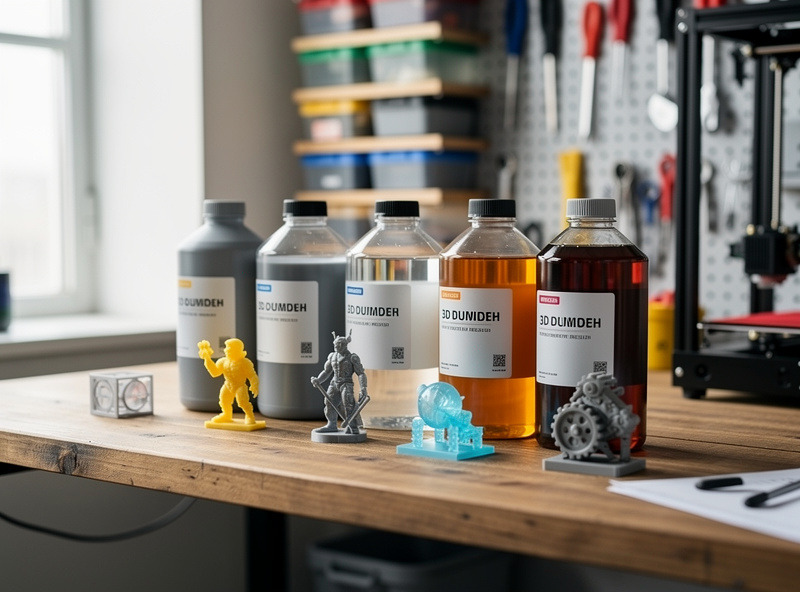
You pay for that durability in two ways: tough resins generally hold slightly less crisp detail than a good standard resin, and they’re more sensitive to exposure — under-cure them and they stay rubbery and weak, over-cure them and you lose the toughness you bought them for. This is the family I reach for when a resin part needs to be functional rather than decorative: a bracket, a snap-fit housing, a part that will get handled. If you’re used to printing functional parts in PETG or ABS on FDM, this is the resin family that comes closest to that mindset, though even the toughest resin still ages and embrittles under UV over time.
Water-Washable Resin: Convenience With a Catch
Water-washable resin lets you rinse uncured resin off a finished print with plain water instead of isopropyl alcohol, which is genuinely convenient — no litres of IPA, no flammable solvent, easier cleanup. For a printer in a small space or a shared home, that’s a real quality-of-life upgrade.
The catch shows up in the part and in the process. Water-washable resins tend to be more brittle than standard ones, are more sensitive to humidity, and can absorb moisture that affects the print if the bottle isn’t kept sealed. There’s also a disposal wrinkle: the rinse water is now contaminated with uncured resin and cannot go down the drain — it has to be UV-cured to solidify the resin out before disposal. I see water-washable as a fair trade for convenience on simple, non-structural prints, but I wouldn’t choose it when I need the best mechanical properties or the finest detail.
Specialty Resins: Flexible, Castable, High-Temp and More
Beyond the big four sit the specialty resins, and they’re worth knowing about even if you rarely use them. Flexible resins print rubbery, bendable parts but are demanding to cure correctly. Castable resins are formulated to burn out cleanly for lost-wax jewellery and dental casting, leaving no ash. High-temp resins resist heat for parts near engines or hot tooling. Draft resins trade detail for raw speed when you just need a fast prototype.
Each specialty family has its own exposure quirks, and none of them is a good first purchase — they assume you already know how to calibrate. The common thread across every resin type is that you can’t reuse another material’s settings — each new bottle needs its own calibration, which is the skill that ties this whole topic together and is covered in depth in the main resin printing guide. Treat each new resin as a new calibration job, not a drop-in swap.
Resin Family Comparison
The fastest way to choose is to start from what the part needs to do, then pick the family that matches. This table summarises the trade-offs I weigh before loading a bottle.
| Resin Type | Detail | Toughness | Cleanup | Best For |
|---|---|---|---|---|
| Standard / Rapid | Excellent | Brittle | IPA | Miniatures, masters, display models |
| Tough / ABS-like | Very good | High (flexes, impact-resistant) | IPA | Functional parts, brackets, housings |
| Water-washable | Good | Brittle | Water | Simple, non-structural prints, easy cleanup |
| Flexible | Good | Rubbery / bendable | IPA | Gaskets, grips, bendable parts |
| Castable | Excellent | N/A (burns out) | IPA | Jewellery and dental casting |
| High-temp | Very good | Heat-resistant | IPA | Tooling, parts near heat |
What to Actually Buy First
For a first bottle, buy a standard or rapid resin in a neutral grey — grey hides nothing during calibration, so you can read detail and layer issues clearly. One litre is plenty to learn on. Add a tough resin only once your standard prints come out clean, because the tough family is less forgiving of a bad exposure and you want to isolate variables while you’re learning.
If you want to compare brands and bottle sizes for that first purchase, a standard grey resin is the safe starting point, with a tough/ABS-like resin as the next step once you’re confident. Whatever you load, store it sealed and away from light — resin slowly cures from ambient UV and stray light, and a half-used bottle left open goes off faster than you’d expect.
Heads up: a couple of links above are affiliate links — buy through them and I may earn a small commission at no extra cost to you. I only point to gear I’d run on my own bench. See my disclaimer page.
Frequently Asked Questions
What is the best type of resin for beginners?
Standard or rapid resin in a neutral grey. It cures predictably, holds excellent detail, sands well for painting, and is the cheapest and most forgiving family to calibrate. Save tough, water-washable, and specialty resins until you understand exposure.
Is tough resin better than standard resin?
Only for functional parts. Tough and ABS-like resins flex and resist impact instead of shattering, which suits brackets and housings. But they hold slightly less crisp detail and are more sensitive to exposure, so standard resin is still better for display models.
Is water-washable resin as strong as standard resin?
Usually it is more brittle. Water-washable resin trades mechanical strength and detail for the convenience of a plain-water rinse instead of isopropyl alcohol. It also absorbs humidity more readily, so keep the bottle sealed and choose it for simple, non-structural prints.
Can I use the same settings for every resin?
No. Each resin family, and often each brand, needs its own exposure settings. Standard, tough, water-washable, and specialty resins cure at different rates, so you should run a calibration print whenever you switch materials rather than reusing old numbers.
What is ABS-like resin?
ABS-like is a marketing term for a tough resin that flexes and resists impact similar to ABS plastic. It does not share ABS filament chemistry; the comparison is to the durable feel, not the polymer. It is a good choice for functional resin parts.