Desiccant is the unglamorous half of filament moisture control, and it’s the half people get wrong most often. They’ll buy a heated dryer, dry a spool perfectly, then drop it in a sealed box with a tired silica packet from a shoebox and wonder why the filament’s wet again in a month. The desiccant is the storage system — the sealed container is just the box around it. Get the desiccant right and a dried spool stays dry for months. Get it wrong and you’re re-drying constantly. Here’s everything I’ve learned keeping a working filament shelf dry in a Swedish workshop that swings humid in summer.
What desiccant does — and what it doesn’t
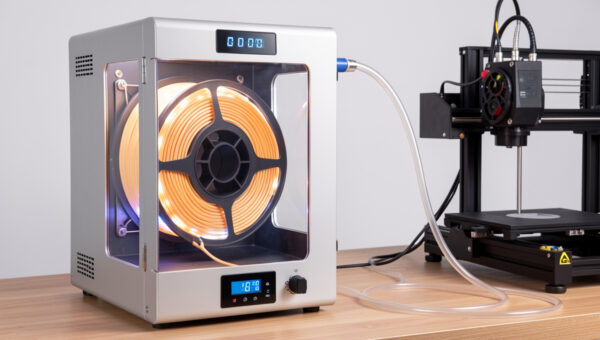
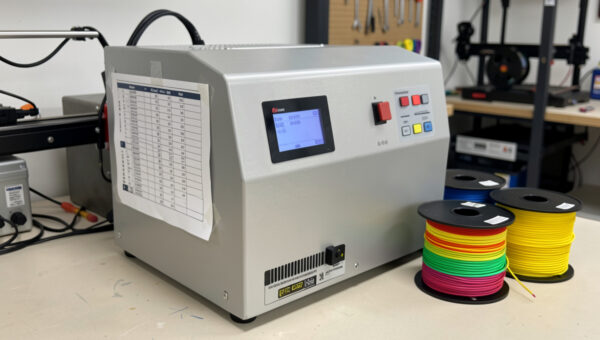
Desiccant adsorbs water vapor from the air inside a sealed container, pulling the humidity down and holding it there so your filament trends toward dry rather than wet. That’s its one job, and it’s a storage job. The critical thing to understand: desiccant keeps already-dry filament dry; it does not dry a wet spool. It pulls moisture far too slowly to drive water back out of a soaked nylon spool — that requires heat from a dryer or dehydrator. Use heat to dry, desiccant to maintain. If you’re fuzzy on that split, the filament moisture guide lays out the whole dry-then-store model.
The desiccant types, ranked for filament storage
| Type | Rechargeable? | Indicator? | Best for |
|---|---|---|---|
| Indicating silica gel beads | Yes (bake/microwave) | Yes — color change | My default: reusable + tells you when spent |
| Rechargeable canister/cartridge | Yes (plug in or oven) | Usually | Set-and-forget, easy recharge |
| Plain silica packets | Sometimes | No | Cheap bulk, but you can’t tell when they’re done |
| Clay/montmorillonite | Limited | No | Budget bulk; lower capacity than silica |
| Molecular sieve | Yes (high heat) | No | Strongest pull, used in active dryers |
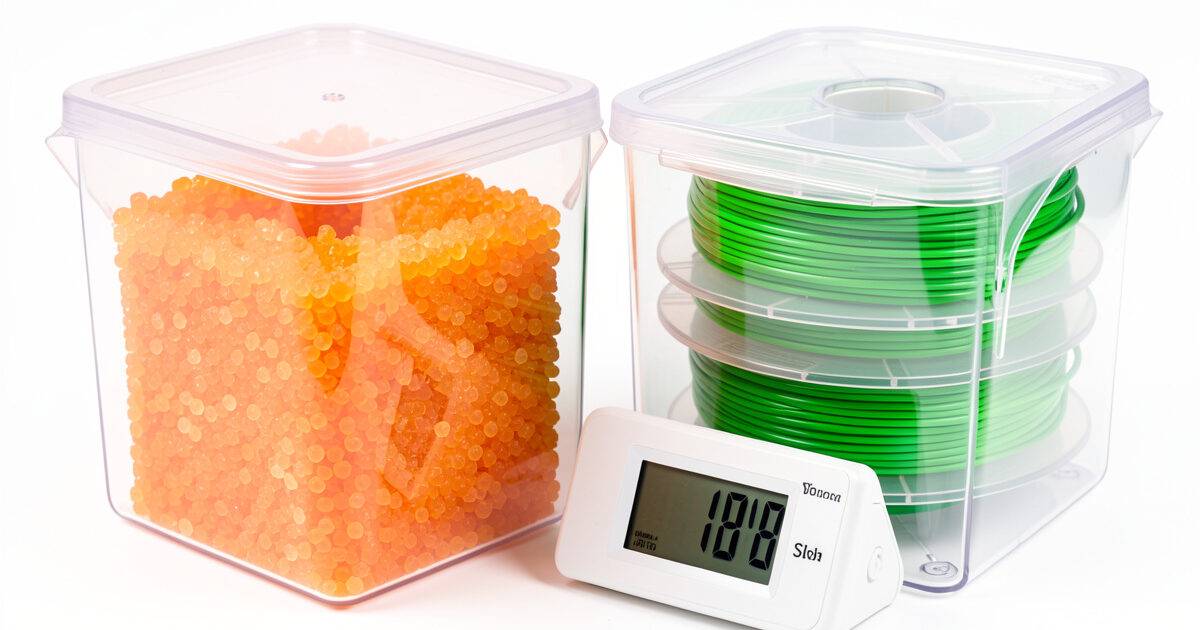
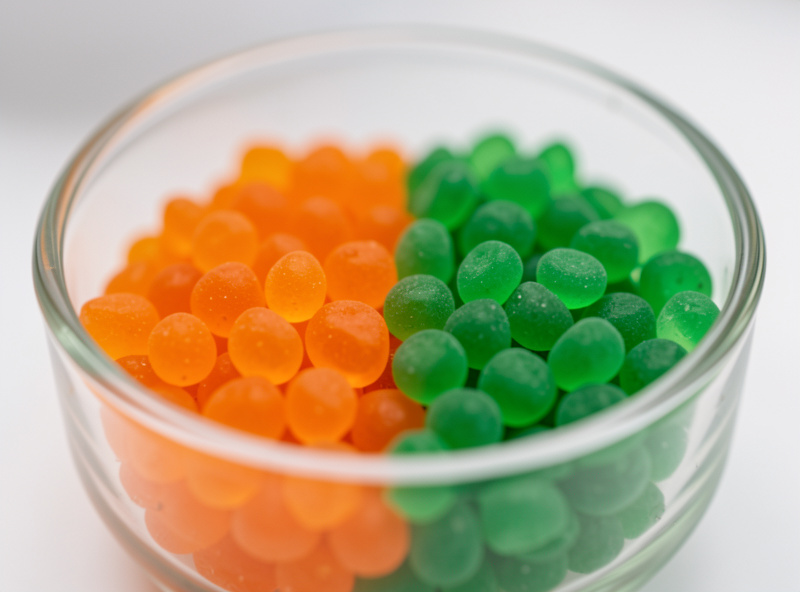
For a filament shelf, my strong preference is indicating silica gel — the kind with beads that change color (typically orange-to-green or blue-to-pink, depending on the indicator) as they saturate. The color change is the whole reason I use it: it tells you at a glance when the desiccant is spent and needs recharging, instead of leaving you guessing whether that packet in the box is still doing anything. A good stash of rechargeable indicating silica gel beads is the backbone of my storage.
Rechargeable vs single-use: buy rechargeable
This one’s easy. Single-use desiccant is a recurring cost and an environmental waste, and worse, the cheap packets give you no indication when they’ve stopped working — so you find out only when a spool prints wet. Rechargeable silica gel pays for itself fast: when the indicator shifts color, you dry the beads out (in a low oven or, for some products, a microwave or a built-in plug-in heater) and they’re good as new for another cycle. I’ve recharged the same beads dozens of times. The only reason to use single-use packets is convenience in a sealed bag you’ll never reopen — for an active filament shelf, rechargeable wins every time.
A particularly tidy option is a rechargeable desiccant canister — a sealed cartridge of indicating beads you drop in a container and recharge whole, no loose beads to handle. They’re a clean way to dose a storage tub.
How much desiccant per container
This is where people under-dose. A token packet in a big tub barely moves the humidity. The bigger the air volume and the more spools, the more desiccant you need. My rule of thumb: be generous, watch the hygrometer, and add more if the humidity won’t come down or won’t stay down. For a typical storage tub holding a few spools, that’s a meaningful handful of beads or a canister rated for that volume — not one tea-bag-sized packet. The feedback loop is simple: if your hygrometer isn’t reading low and staying low, you don’t have enough active desiccant in there.
You cannot skip the hygrometer
Desiccant without a hygrometer is flying blind. A cheap digital hygrometer in each storage container is the few-dollar instrument that makes the whole system work — it tells you the current humidity and, by extension, whether your desiccant is still doing its job. The widely-cited target for filament storage is to hold relative humidity below roughly 15–20% inside the container, which matches what I’ve found keeps even thirsty materials printable off the shelf. When the hygrometer creeps up, the desiccant is saturating and it’s time to recharge or add more. Indicating beads and a hygrometer together give you two independent readouts of the same thing — belt and suspenders, and worth it.
Recharging desiccant: the routine
- Watch for the signal. Indicating beads change color when saturated; the hygrometer climbing is the other tell.
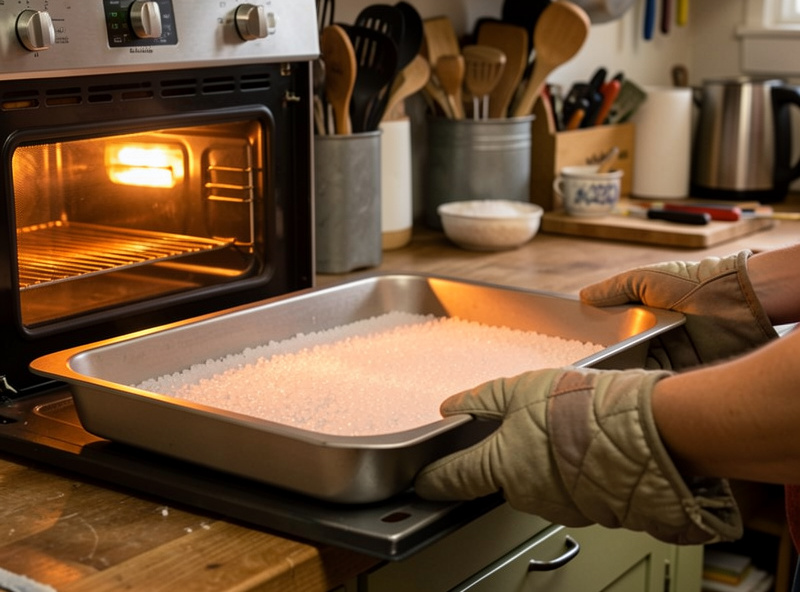
- Drive the moisture back out. Most indicating silica recharges in a low oven for a couple of hours, or via the product’s own method (some canisters plug into a USB or wall outlet and self-heat; some beads are microwave-rated — follow the product’s instructions, since not all silica is microwave-safe).
- Let it cool sealed. Cool the recharged desiccant in a closed container so it doesn’t re-absorb room humidity before it goes back to work.
- Return it to the tub. Back in with the filament, hygrometer watched, and you’re set for another cycle.
Once you’ve recharged desiccant a few times it becomes background maintenance — a glance at the bead color when you grab a spool, an occasional bake. That small habit is what keeps a shelf full of thirsty materials printable without a heated dryer running constantly.
The container matters as much as the beads
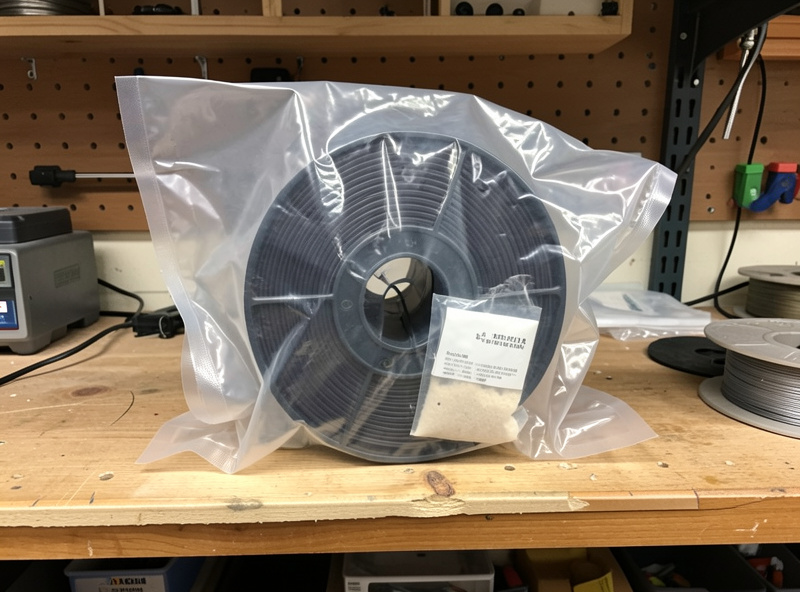
Desiccant can only do its job inside a genuinely airtight container — a leaky tub leaks humidity back in faster than the beads can pull it out, and you’ll burn through desiccant fighting a losing battle. The two routes I trust: a rigid airtight tub with a gasketed lid and clamp latches, or vacuum storage bags for spools you’re storing long-term and won’t touch for a while. A set of vacuum storage bags with a hand pump plus a desiccant pack inside each is about the most moisture-proof way to mothball a spool you won’t use for months — you pull the air out, the bag collapses around the spool, and there’s almost no air volume left to hold humidity. For everyday access, the gasketed tub with indicating beads and a hygrometer is more practical.
Mistakes I see with desiccant storage
- Under-dosing. One small packet in a big tub does almost nothing. Be generous and let the hygrometer confirm it’s working.
- Never recharging. Saturated desiccant is just a colored rock taking up space. Watch the indicator and the hygrometer, and recharge on schedule.
- Using non-indicating packets and guessing. Without a color indicator or a hygrometer, you have no idea whether the desiccant is alive or dead. Buy indicating beads, or always pair plain ones with a meter.
- Leaky containers. A tub that isn’t truly airtight undoes everything. Check the seal.
- Expecting desiccant to dry a wet spool. It won’t. Dry with heat first; desiccant only maintains.
Desiccant in an AMS or enclosure
If you run a Bambu AMS or any printer enclosure with a desiccant tray, the same rules apply: the desiccant in there is doing storage duty, keeping dry filament dry, and it saturates and needs recharging just like a storage tub’s does. Many people set up the AMS once and never refresh the desiccant, then wonder why it’s not protecting their filament — the beads are spent. Treat the AMS desiccant as a consumable on the same recharge cycle as everything else.
What I actually run
My shelf is indicating silica gel in sealed tubs, a digital hygrometer in each, generous dosing so the humidity sits in the teens, and a recharge whenever the beads shift color. Thirsty materials I print constantly live in an always-on heated box instead; everything else lives in the desiccant tubs. It’s cheap, it’s low-effort once set up, and it means I almost never have to stop and dry a spool before a print. For the full container-and-layout side of storage, see my filament storage humidity guide.
Frequently asked questions
What is the best desiccant for filament storage?
Indicating, rechargeable silica gel beads are the best all-around choice. They change color as they saturate so you know when to recharge, they pull humidity down effectively, and they can be dried out and reused dozens of times. A rechargeable desiccant canister of the same indicating silica is a tidy alternative when you don’t want to handle loose beads.
Can desiccant dry out wet filament?
No. Desiccant keeps already-dry filament dry but pulls moisture far too slowly to drive water out of a wet spool. Drying a soaked spool requires heat from a filament dryer, dehydrator, or carefully managed oven. The correct workflow is to dry with heat first, then store with desiccant to maintain.
How much desiccant do I need per storage box?
More than most people use. A token packet barely moves humidity in a large tub. Dose generously relative to the air volume and number of spools, then watch a hygrometer — if the humidity won’t drop into the target range or won’t stay there, add more desiccant. For a typical few-spool tub that means a real handful of beads or a canister rated for that volume.
How do I recharge silica gel desiccant?
When indicating beads change color, drive the moisture back out with heat — typically a low oven for a couple of hours, or the product’s own method, since some canisters self-heat and some beads are microwave-rated while others aren’t. Let the recharged desiccant cool in a sealed container so it doesn’t re-absorb room humidity, then return it to your storage. Most indicating silica recharges many times.
What humidity should desiccant hold filament at?
The widely-recommended target is below roughly 15 to 20 percent relative humidity inside a sealed container, which matches manufacturer storage guidance and keeps even sensitive materials printable. Pair the desiccant with a digital hygrometer so you can confirm you’re hitting and holding that range rather than guessing.