Every FDM 3D printer emits two things the moment it melts plastic: volatile organic compounds (VOCs) and ultrafine particles (UFPs) smaller than 100 nanometers. The amount swings wildly by material — ABS can release ultrafine particles at rates roughly an order of magnitude higher than PLA, plus styrene, a VOC treated as a suspected carcinogen. The fix is matching ventilation to the filament, not avoiding printing.
This is the part of 3D printing safety people most often get wrong, because the emissions are invisible and the smell does not track the hazard. I run PLA, PETG, ABS, ASA, TPU and carbon-fiber blends across my bench, and the difference in what they put into the room is the single biggest reason I treat materials differently. Let me walk through what is actually coming off your printer and what changes it.
What the emission research actually found
The foundational work came from Brent Stephens and Parham Azimi at the Illinois Institute of Technology, who measured particle and VOC emission rates across many desktop printer and filament combinations, and it has been extended by UL’s Chemical Insights Institute. Two findings hold up across all of it. First, every FDM printer is a meaningful source of ultrafine particles while printing. Second, the filament matters far more than the brand of machine.
PLA, printed cool, sits at the low end for both particles and VOCs — its dominant emission is lactide, considered low-hazard. ABS sits at the high end: high ultrafine-particle counts and styrene release. The practical translation is that the same printer is low-risk with one spool and a material you want to ventilate aggressively with another. That is why a blanket “is 3D printing safe” answer is useless — it depends entirely on what is loaded.
VOCs versus particles: two different problems
It helps to separate the two, because they need different controls. VOCs are gas-phase chemicals — styrene from ABS and ASA, caprolactam from nylon, lactide from PLA. They are what you smell, and the EPA’s guidance on indoor VOCs is the right grounding for why concentration in an occupied room matters. A HEPA filter does nothing to a VOC; you need activated carbon to adsorb it, or fresh air to dilute it.
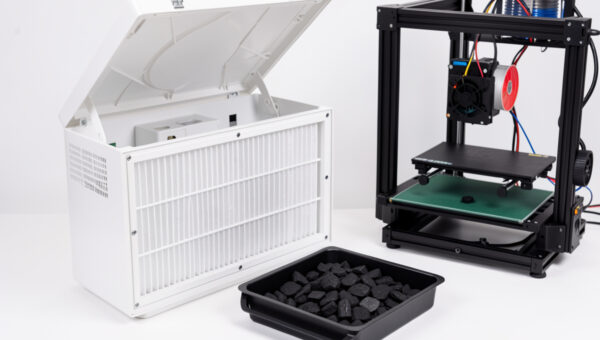
Ultrafine particles are the bigger surprise to most people because they are odourless. They form as the hot plastic flash-cools and condenses into solid nano-scale particles, small enough to bypass the upper airway and deposit deep in the lungs. These you capture with HEPA-grade media or remove with ventilation — carbon does little for them. Because the two hazards need opposite media, the only complete filtration answer is HEPA and carbon together, which is exactly why I treat the HEPA and carbon filter setup as its own subject.
How each common filament ranks for emissions
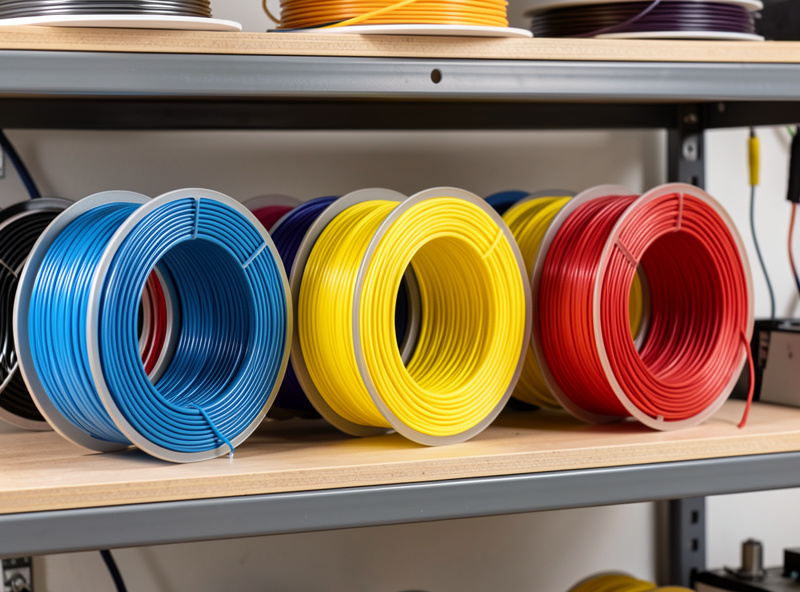
Here is how I sort the shelf for air handling, drawn from the emission research and from running each material for hundreds of hours. The ranking tracks print temperature closely — hotter plastic, more emissions — but chemistry matters too.
| Material | Typical nozzle temp | Particle output | Notable VOC | Air control needed |
|---|---|---|---|---|
| PLA | ~200 C | Low | Lactide (low-hazard) | Open window / small filter |
| PETG | ~235 C | Low–moderate | Minor | Light ventilation |
| TPU | ~225 C | Low–moderate | Minor odour | Light ventilation |
| ABS | ~245 C | High | Styrene | Enclosure + active exhaust |
| ASA | ~250 C | High | Styrene | Enclosure + active exhaust |
| Nylon (PA) | ~260 C | High | Caprolactam | Enclosure + active exhaust |
| PC / blends | ~270 C | High | Varies | Enclosure + active exhaust |
The line in that table is between PETG/TPU and ABS: below it, ventilation is a nicety; above it, it is mandatory. The full filament guide covers the printing characteristics of each, and the ASA vs ABS comparison covers why ASA is my outdoor default despite the same styrene handling.
What actually lowers your emissions
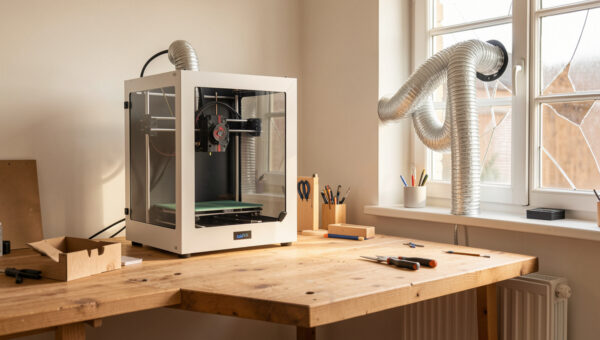
Three levers move the number, in order of effect. The biggest is material choice — switching a part from ABS to PETG where the application allows cuts both particle and VOC output dramatically. The second is enclosure plus removal: containing the emissions at the source and ducting that air outside (best) or scrubbing it through HEPA and carbon (when you cannot vent). The third, smaller lever is print temperature — running at the low end of a filament’s usable range trims emissions a little, though you should never sacrifice layer adhesion for it.
What does not work is wishful thinking: a HEPA-only desk purifier (misses VOCs), an enclosure with no exhaust (concentrates everything you then breathe when you open it), or relying on smell (the worst-particle materials are not the smelliest). For whole-room strategy — the right call for a busy corner of a shared shop — the room ventilation guide covers air changes and exhaust sizing, and the ABS and ASA enclosure guide covers containment.
Measure it, do not argue about it
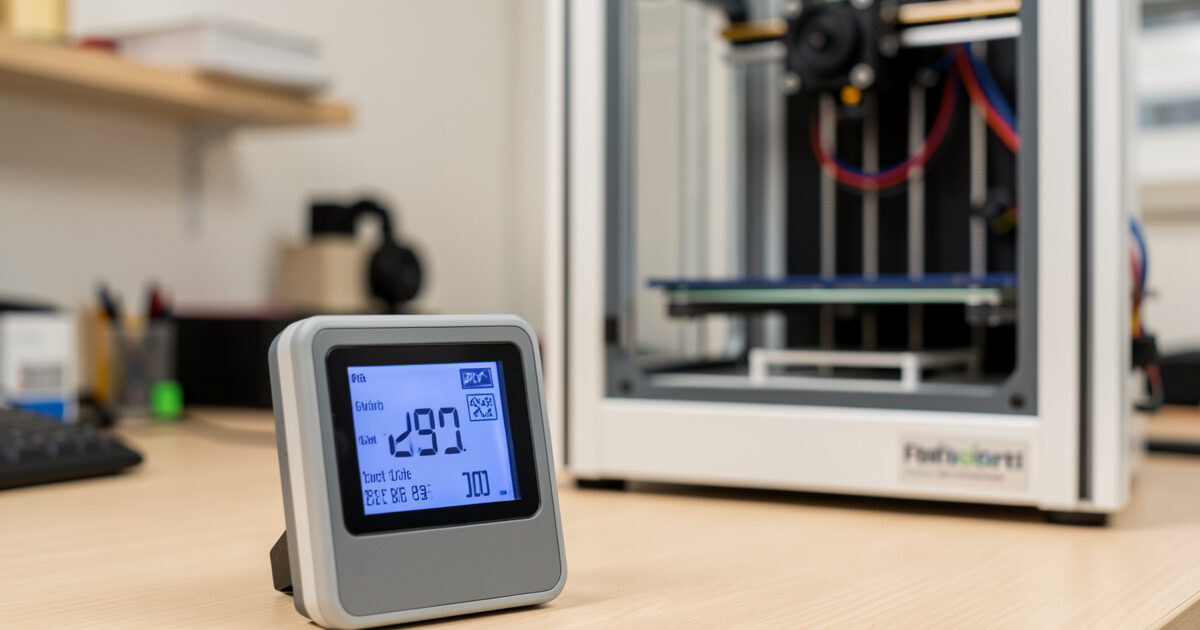
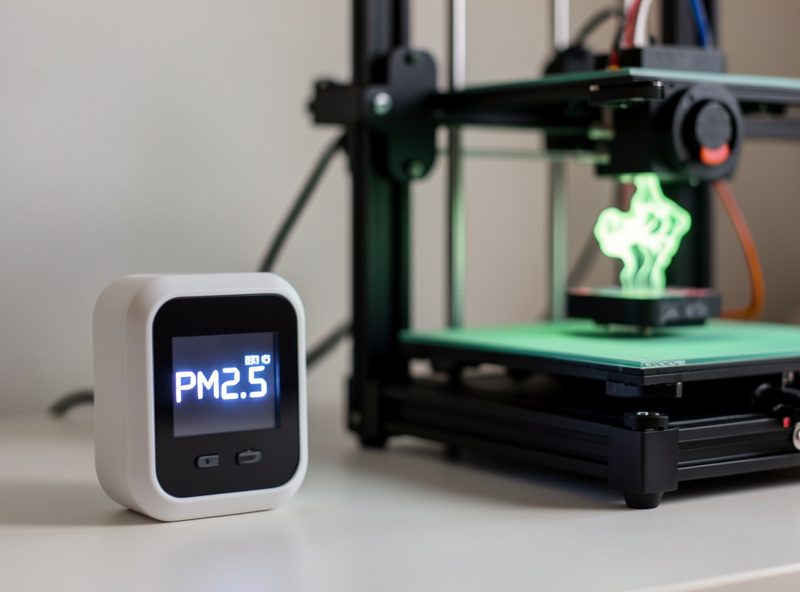
The cheapest way to end the guesswork is a consumer air quality monitor reading PM2.5 and VOC sitting beside the printer. It will not give lab-grade microgram figures, but it shows the relative change, and that is what you act on. I watch PM2.5 barely move on a PLA print and climb steadily on an unenclosed ABS print — the same lesson the emission studies report, now happening on my own bench. As an Amazon Associate I earn from qualifying purchases. Pair the monitor with a HEPA-and-carbon unit if venting outside is not an option; a purifier with both media is the realistic indoor fallback. The whole approach fits into the broader workshop setup, and connects back to the full 3D printing safety and air quality guide.
Why smell is the worst possible guide
The instinct everyone starts with is to trust their nose: if it does not smell, it must be fine. That instinct is backwards for the most important hazard. Ultrafine particles are odourless, so the materials that load the most particles into the air do not announce themselves. Meanwhile PETG can smell faintly sweet while emitting relatively little. You end up worrying about the wrong spool.
Smell tells you one useful thing — that VOCs are present at a concentration your nose can detect, which is a reason to improve ventilation — but it tells you nothing about particle load and nothing about the long-term concentration that matters. This is the entire argument for a cheap monitor over a sniff test. A number that climbs when you start an ABS print is information; a faint plastic smell that you stop noticing after ten minutes (because your nose fatigues) is not. Treat odour as a one-way signal: a smell means act, but no smell does not mean safe.
The material policy I actually run by room
Concretely, here is how the emission ranking turns into a rule I do not have to think about. In the open part of my workshop, with a window I can crack, I print PLA, PETG and TPU freely — these are the materials behind most of my functional parts, and their emissions are low enough that passive airflow handles them. Anything in the ABS, ASA, nylon or polycarbonate tier goes into the enclosure with the ducted exhaust running, with the door staying shut until the print and a short cool-down are done, so the trapped fumes get pulled outside rather than into the room when I open it.
The one room rule I will not bend: no ABS, ASA or resin printing in a bedroom, a small sealed closet, or any space where someone sleeps or sits for hours. The exposure there is chronic and the room volume is too small to dilute it. If the only space you have is a bedroom, the honest answer is to stick to PLA and PETG, or move the hot-material printing to a garage or vented utility space. That single boundary removes most of the real-world risk this topic is about. Everything else — the monitor, the filter, the enclosure — is refinement on top of getting that one decision right.
Frequently Asked Questions
Are 3D printer fumes harmful?
They can be, depending on the material and your ventilation. FDM printers emit ultrafine particles and VOCs; ABS in particular releases styrene and high particle counts, while PLA is far lower. The risk is chronic exposure in an unventilated room over hundreds of hours, which is why matching ventilation to the filament matters more than any single number.
Which filament emits the least when printing?
PLA is the lowest emitter of the common filaments, producing low particle counts and lactide as its main VOC, which is considered low-hazard. PETG and TPU are close behind. ABS, ASA, nylon and polycarbonate print hotter and emit far more particles and stronger VOCs, so they need an enclosure and active exhaust.
What are ultrafine particles from 3D printing?
Ultrafine particles are solid particles smaller than 100 nanometers that form when hot extruded plastic flash-cools and condenses. They are odourless and small enough to deposit deep in the lungs. HEPA-grade filtration captures them and ventilation removes them, but activated carbon does little for particles.
Does a carbon filter remove 3D printing particles?
No. Activated carbon adsorbs gas-phase VOCs like styrene but does almost nothing for solid ultrafine particles. To handle both you need HEPA media for the particles and carbon for the VOCs in the same airflow, or you duct the air outside, which addresses both at once.
Can I reduce 3D printer emissions without an enclosure?
Partly. Choosing a lower-emitting material like PETG over ABS is the biggest lever, and printing at the low end of a filament’s temperature range trims emissions slightly. But for ABS, ASA, nylon and polycarbonate, an enclosure with exhaust or a HEPA-plus-carbon purifier is the only reliable control.