A HEPA filter alone does not clean 3D printer air. It captures the ultrafine particles but ignores the gas-phase VOCs like the styrene ABS releases. To actually scrub the air you need two media in series: a true HEPA stage for particles and an activated-carbon stage for VOCs. A true HEPA stage traps 99.95% of particles but zero VOCs, so get only one medium and you are filtering half the problem while believing it is handled.
This is the most common filtration mistake I see, and it comes from people buying a cheap HEPA desk purifier, watching the particle number drop, and assuming the job is done. The VOCs pass straight through. On my own bench, where I run ABS and ASA in an enclosure, the air handling is the part I think about hardest — so let me lay out what each medium does, when filtration beats venting, and how to build or buy a setup that works.
Why you need both HEPA and carbon
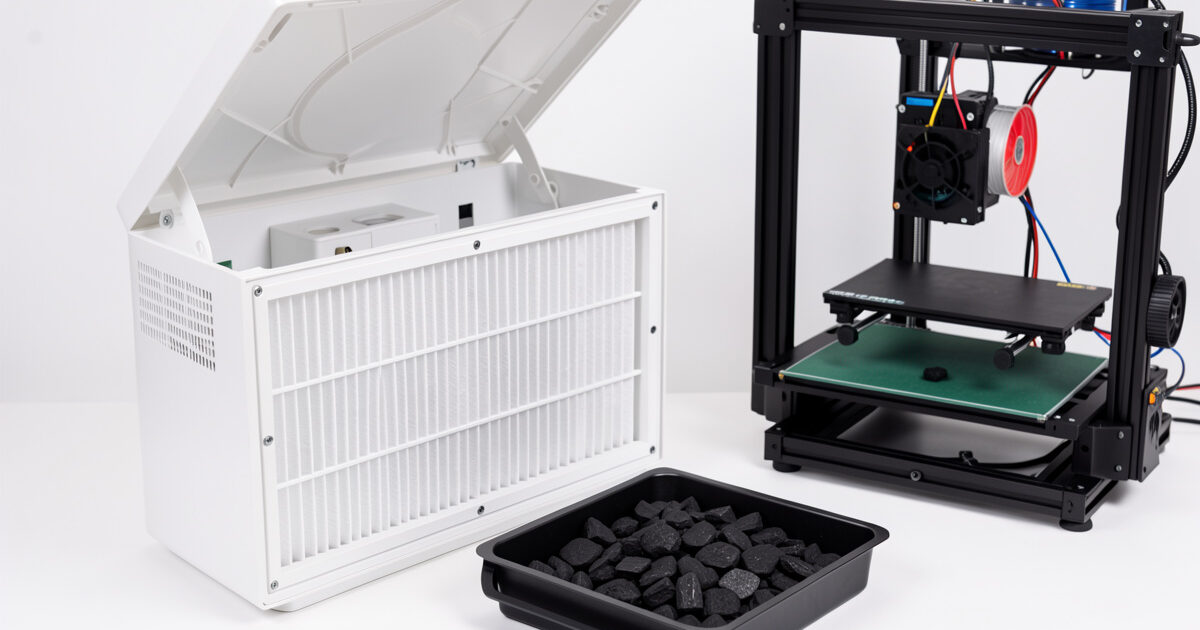
The two pollutants from FDM printing need opposite filters. Ultrafine particles are solids; a true HEPA filter (H13 or better) mechanically traps them, rated to capture 99.95% of particles at the hardest-to-catch size. VOCs are gases; no particle filter touches them — they slip through HEPA like wind through a net. Only activated carbon, with its enormous internal surface area, adsorbs the styrene, caprolactam and other VOCs covered in the emissions guide.
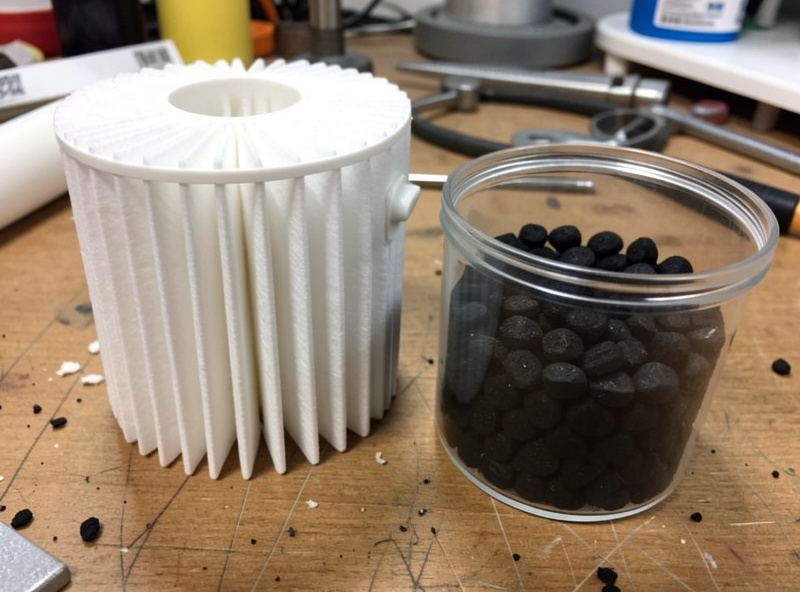
So a complete unit pulls printer air through carbon first (or HEPA first — order is debated, both work) and then the other stage, removing particles and gas in one pass. A HEPA-only unit leaves the VOCs; a carbon-only unit leaves the particles. The amount of carbon matters too: a thin carbon-impregnated sheet wrapped around a HEPA filter saturates fast and does little. You want a real bed of carbon pellets — weight, not surface coating — for it to last.
Filtration versus ducting outside
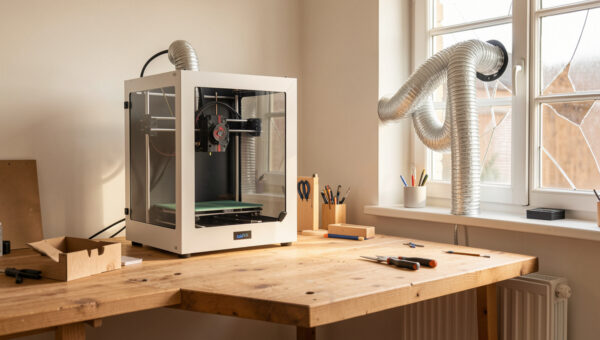
Before buying a filter, be honest about the better option: if you can run a duct to a window, ducting the air outside beats any filter because it removes 100% of everything with no medium to saturate. Filtration is the answer when venting is impossible — a rented flat, an interior room, winter in Sweden when an open window is not realistic for eight-hour prints. I duct when I can and filter when I cannot, and I cover the whole-room exhaust approach in the ventilation guide.
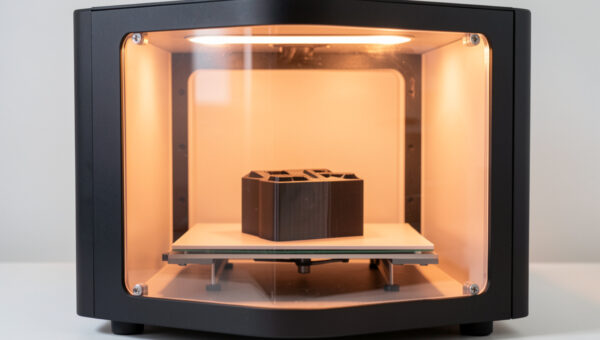
Filtration also pairs naturally with an enclosure, because containing the emissions in a small volume means the filter only has to process the enclosure’s air, not the whole room. That is far more effective than a standalone purifier trying to clean an open space faster than the printer pollutes it. The ABS and ASA enclosure guide covers the containment side that makes filtration efficient.
Your filtration options compared
There are four realistic ways to filter, and they trade cost against effectiveness. Here is how I rank them for someone deciding what to build or buy.
| Option | Particles | VOCs | Best for | Rough cost |
|---|---|---|---|---|
| HEPA-only desk purifier | Good | None | PLA only — not enough for ABS | Low |
| HEPA + carbon room purifier | Good | Good (if real carbon bed) | Open-room printing, no venting | Medium |
| Enclosure recirculating filter (HEPA + carbon) | Very good | Good | Enclosed printer, can’t vent | Low–medium |
| Inline duct fan + carbon, vented out | Excellent | Excellent | Enclosed printer with a window | Medium |
My default for hot materials is the last row: an inline duct fan pulling enclosure air through a carbon canister and out the window. It is the closest thing to a fume hood and the carbon mainly handles the residual smell rather than doing all the work. When venting is genuinely off the table, a room purifier with both HEPA and a real carbon bed is the fallback. As an Amazon Associate I earn from qualifying purchases.
DIY versus commercial recirculating filters
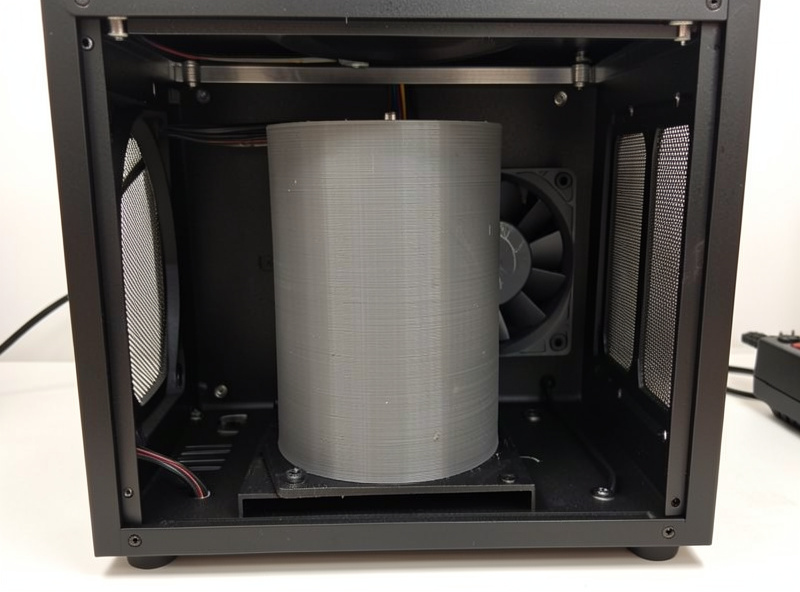
For an enclosure, you can buy a printed recirculating filter housing (the popular “BentoBox” style design) that holds a HEPA pad and carbon pellets and runs on a small fan inside the chamber, or buy a sealed commercial unit. The DIY route is cheap and effective if you actually fill it with enough carbon and replace the media on schedule. The failure mode is building one, never changing the media, and trusting a saturated filter that stopped working months ago.
Whatever you run, the carbon is a consumable. Activated carbon adsorbs until its surface is full, then it passes VOCs straight through with no warning — there is no indicator light for a saturated carbon bed. I treat carbon as a replace-on-schedule item, swapping it every few months of regular ABS printing, sooner if I notice odour returning. The HEPA stage lasts longer but clogs eventually too; reduced airflow is the sign. A box of replacement HEPA and carbon media kept on the shelf is what keeps the system honest.
Sizing the airflow so the filter keeps up
A filter only works if it moves enough air to process the chamber faster than the printer fills it. For a typical enclosure you want the fan to turn over the chamber volume several times a minute, so a small, quiet inline or radial fan rated well above the enclosure volume is the right call — airflow drops once a filter is in the path, so oversize it. Too weak a fan and fumes build up faster than the filter clears them; too strong an extraction on an enclosure and you cool the chamber and undo the warping control you built the enclosure for in the first place. There is a balance, and for ABS it sits on the side of a gentle, continuous draw rather than a gale.
This is the detail people skip: they bolt a filter onto an enclosure with a token fan, see the smell drop a little, and call it solved while the particle count barely moves. Match the fan to the chamber, keep the media fresh, and the system genuinely works. It all ties back to the full safety and air quality guide and the broader workshop setup where the printer shares space with other tools.
Frequently Asked Questions
Does a HEPA filter remove 3D printer fumes?
Only the particle half. HEPA media captures ultrafine particles but does nothing for gas-phase VOCs like the styrene from ABS. To remove both you need a HEPA stage for particles and an activated-carbon stage for VOCs in the same airflow. A HEPA-only purifier is adequate for PLA but not for ABS or ASA.
What grade of HEPA filter do I need for a 3D printer?
A true HEPA rated H13 or better captures 99.95% of particles at the most-penetrating size, which covers the ultrafine particles 3D printers emit. Avoid HEPA-type or HEPA-like filters that are not certified. The HEPA stage handles particles; pair it with a real activated-carbon bed for the VOCs.
How often should I replace the carbon filter?
Activated carbon saturates with no warning indicator, so replace it on a schedule rather than waiting for a sign. For regular ABS or ASA printing, every few months is reasonable, sooner if odour returns. The HEPA stage lasts longer but should be swapped when airflow noticeably drops from clogging.
Is ducting outside better than filtering?
Yes, when you can do it. Ducting printer air outside removes 100% of particles and VOCs with no medium to saturate, while a filter only adsorbs until the carbon is full. Filtration is the right choice when venting is impossible, such as an interior room or a rented flat where you cannot run a duct to a window.
Will an air purifier alone clean my print room?
For PLA, often yes. For ABS, ASA, nylon or polycarbonate, a standalone purifier struggles to clean an open room faster than the printer pollutes it. Containing the emissions in an enclosure first, then filtering or venting that smaller volume, is far more effective than trying to scrub a whole open room.
Can I build my own 3D printer air filter?
Yes. A printed recirculating filter housing that holds a HEPA pad and a bed of activated-carbon pellets, driven by a small chamber fan, works well if you fill it with enough carbon and replace the media on schedule. The common failure is building one and never changing the saturated media.