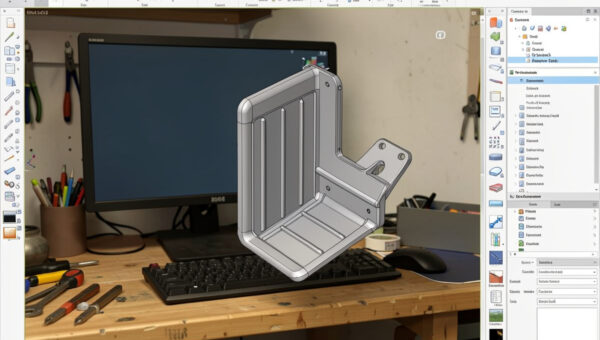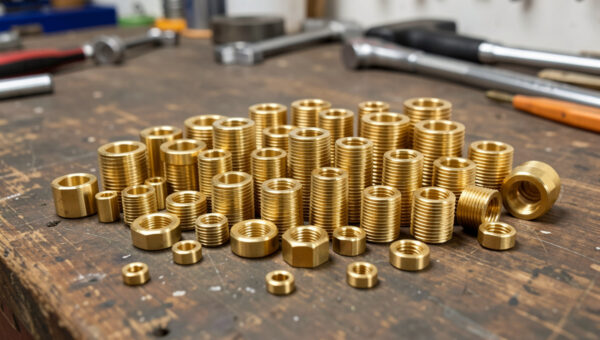
Snap fits and press fits are the two tool-free ways to assemble 3D printed parts: a snap fit uses a flexing feature that clicks past a ledge and springs back to hold, while a press fit holds two parts together by friction alone. Both depend almost entirely on getting the clearance right — typically a small interference for a press fit and a designed deflection for a snap clip — and on choosing a material tough enough to flex without cracking.
These are the joints that make printed assemblies feel finished: a battery cover that clicks shut, a bracket that presses onto a rail, an enclosure that opens with a thumb instead of a screwdriver. I use them constantly, and the failures are always the same two things — a clip too stiff and brittle, or a fit too tight that splits the part. This snap fit 3D printing guide covers the geometry and materials that work on the bench, and it sits in the functional printing workflow alongside heat-set inserts as the main ways to join parts.
Snap Fits: How They Work
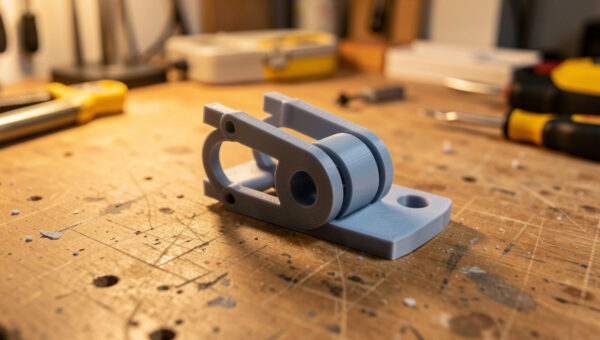
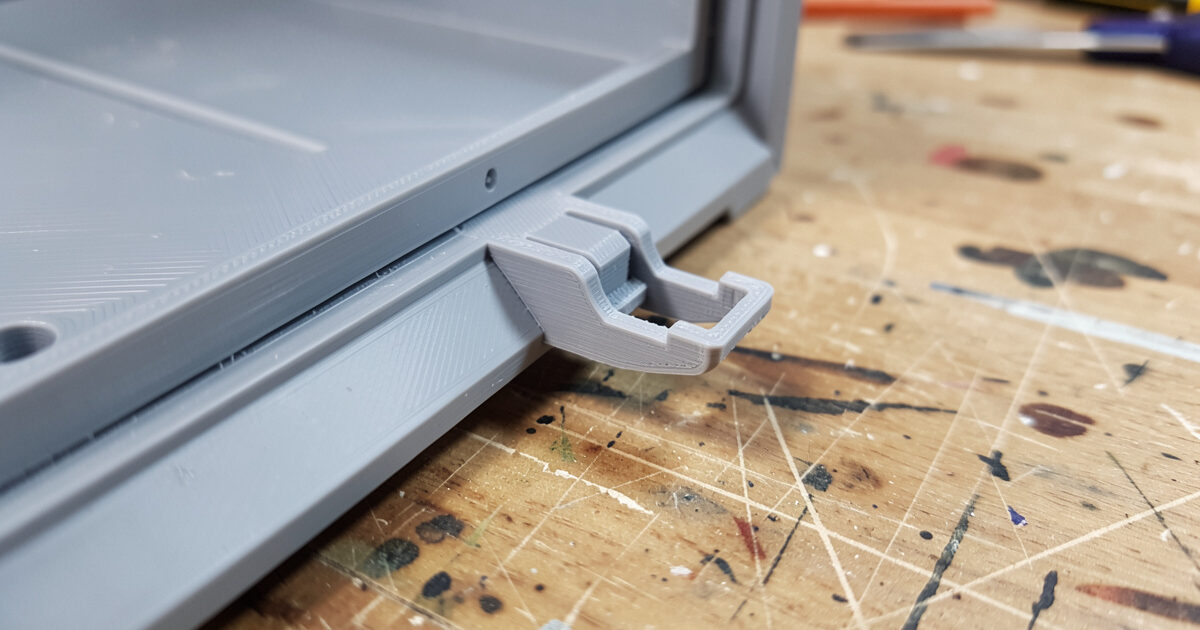
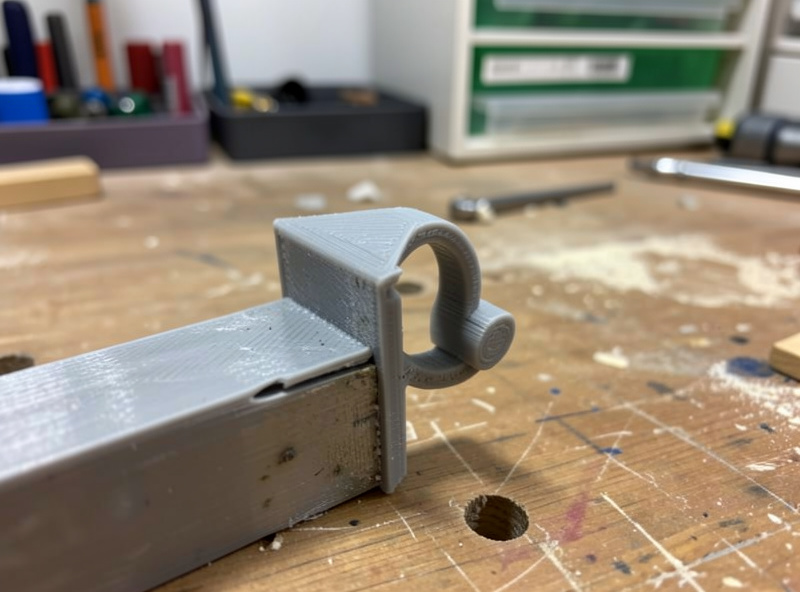
A snap fit is a cantilever — a flexible arm with a hook on the end — that bends as it slides past a mating edge, then springs back so the hook catches behind a ledge. The arm has to deflect enough to clear the ledge without exceeding the strain the material can take, then return to shape. Design it too stiff and it cracks instead of flexing; design it too soft and it does not hold. The whole skill is balancing deflection against strength.
The two variables you control are the arm’s length and thickness. A longer, thinner arm flexes more easily and strains less for a given deflection, which is why stubby little clips snap off and long slender ones survive. The hook’s depth — how far it overlaps the ledge — sets how hard it is to engage and release. A small hook clicks easily and releases readily; a deep hook holds firmly but strains the arm more on every cycle. Material matters as much as geometry, which is where most PLA snap clips fail.
Designing a Cantilever Snap That Survives
The most reliable snap clip is long, thin, and printed so the arm flexes within its layers rather than across them. Make the arm as long as the design sensibly allows and keep it relatively thin so the bending strain stays low. Add a fillet where the arm meets the body — that root is where snap clips break, exactly the stress-concentration problem from my designing for strength guide, and a fillet there dramatically extends life. The Protolabs Network snap-fit design guide walks through the cantilever strain maths if you want to size an arm from first principles rather than by feel. Taper the arm slightly thinner toward the tip so the strain spreads along its length instead of concentrating at the root.
Orientation is the quiet killer. If the clip prints so that bending pulls across the layer lines, it snaps at the root on the first flex no matter how good the geometry is. Orient the part so the arm flexes in-plane, with the layers running along the arm. Sometimes that means the clip prints flat or the whole part is reoriented to suit the clips — worth it, because a snap clip is the feature most sensitive to layer direction. Prusa’s snap-fit joints walkthrough shows the same in-plane orientation rule on real printed clips. For clips that engage and release often, design a generous lead-in chamfer so the user is not forcing the arm past its limit each time.
Press Fits: Friction Holds It
A press fit holds with a slight interference — the peg is very slightly larger than the hole, so it has to be pushed in and grips by friction. It is the simplest joint to design and the easiest to get wrong, because the line between “holds firmly” and “splits the part” is only a tenth or two of a millimetre. Too much interference and the hoop stress cracks the surrounding wall; too little and the parts fall apart. The surrounding wall needs enough material to take the stress without splitting, which is why a press-fit boss wants a decent wall thickness around it.
For a typical press fit I design around 0.0 to 0.1 mm of interference — the peg essentially nominal or a hair over the hole — and tune from there based on a test. Because FDM holes print undersized and pegs oversized, a peg and hole modelled at the same dimension already gives a press fit by default, often a tighter one than intended. That is why the clearance and tolerance work matters so much; the full picture is in my tolerances and clearances guide, which is the companion to this one.
Choosing the Right Material
Material decides whether a snap fit flexes or shatters. PETG is my default for snaps and press fits: it is tough, flexes without cracking, and tolerates repeated engagement far better than PLA. PLA is stiff and brittle — it can work for a press fit or a snap that engages once and stays, but it cracks under repeated flexing, so I avoid it for clips that open often. ABS and ASA flex well and add heat resistance for parts near warmth. Nylon is the toughest of all for living, flexing snaps but is fussier to print.
Here is how the common materials behave for these joints, based on how they perform on my bench rather than spec sheets.
| Material | Snap fit suitability | Press fit suitability | Notes |
|---|---|---|---|
| PETG | Excellent | Excellent | Tough default for both joints |
| PLA | Poor for repeated flex | Good | Brittle, cracks on cycling clips |
| ABS / ASA | Good | Good | Flexes well, adds heat resistance |
| Nylon (PA) | Excellent | Good | Toughest for living snaps, fussy to print |
| TPU | Too soft alone | Grips well | Flexible; good for friction grips |
Whatever you choose, print it dry and reasonably hot for good layer adhesion — a snap clip lives or dies on the layer bond at its root. The filament guide covers the wider material trade-offs if you are deciding what to keep on the shelf.
Common Failures and Fixes
The number one snap-fit failure is a clip that cracks at the root on first flex — almost always wrong orientation or no fillet, occasionally brittle PLA. Fix the orientation so the arm flexes in-plane, add a root fillet, and switch to PETG. The number two failure is a clip too stiff to engage, which strains and breaks it; make the arm longer and thinner. For press fits, the classic failure is a split boss from too much interference — reduce the interference or thicken the wall around the hole.
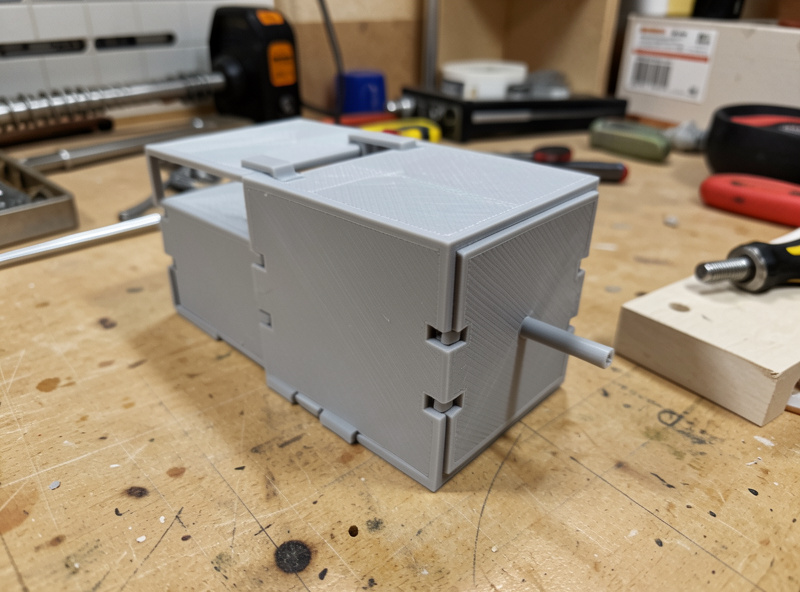
The other frequent issue is a fit that is perfect in one material and wrong in another, because clearances shift with material and your printer’s offset. Always test a snap or press fit in the material you will use for the final part, and print a quick test feature before committing to a long print. A small test coupon of the clip or peg costs minutes and saves a failed assembly. When a joint needs to come apart repeatedly and hold firmly — more than a snap comfortably manages — that is the cue to switch to a screw and heat-set insert instead.
Snap Fit vs Press Fit vs Screws
Each joint suits a different job. Snap fits are best for covers and panels that open and close by hand and do not carry much load — fast, tool-free, satisfying. Press fits are best for permanent or semi-permanent assembly of pegs, dowels, bearings, and parts that just need to stay put. Screws with heat-set inserts are best when the joint takes real load or must be disassembled many times with a firm, repeatable clamp. Most of my functional assemblies mix them: snaps for the lid, press fits for alignment pins, inserts for the structural fasteners.
Matching the joint to the duty is the same judgement that runs through every functional technique — the elegant tool-free snap is only the right answer when the load and cycle life suit it. Get the geometry, orientation, material, and clearance right, and printed snap and press fits turn a pile of parts into a finished, serviceable assembly with nothing but your thumbs.
Frequently Asked Questions
What is the best material for 3D printed snap fits?
PETG is the best all-round choice: tough, flexes without cracking, and tolerates repeated engagement. ABS, ASA, and nylon also flex well, with nylon the toughest for living snaps. Avoid PLA for clips that open often because it is brittle and cracks under repeated flexing.
How do I stop my snap fit from breaking?
Make the arm longer and thinner so it flexes with less strain, add a fillet where the arm meets the body, and orient the part so the arm bends within its layers rather than across them. Switching from PLA to PETG fixes most repeated-flex failures.
How much interference should a press fit have?
Around 0.0 to 0.1 mm of interference for most 3D printed press fits. Because FDM holes print undersized and pegs oversized, modelling both at the same dimension often gives a press fit already. Test in your material and reduce interference if the boss splits.
Why does my snap fit print fine but crack when I use it?
Almost always print orientation. If the arm flexes across the layer lines, the bend pulls on the weak inter-layer bonds and it cracks at the root. Reorient so the arm flexes in-plane, add a root fillet, and use a tough material like PETG.
When should I use screws instead of snap or press fits?
Use screws with heat-set inserts when the joint carries real load or must be disassembled many times with a firm, repeatable clamp. Snap fits suit hand-opened covers, press fits suit permanent pegs and bearings, and screws handle the structural, frequently-serviced connections.